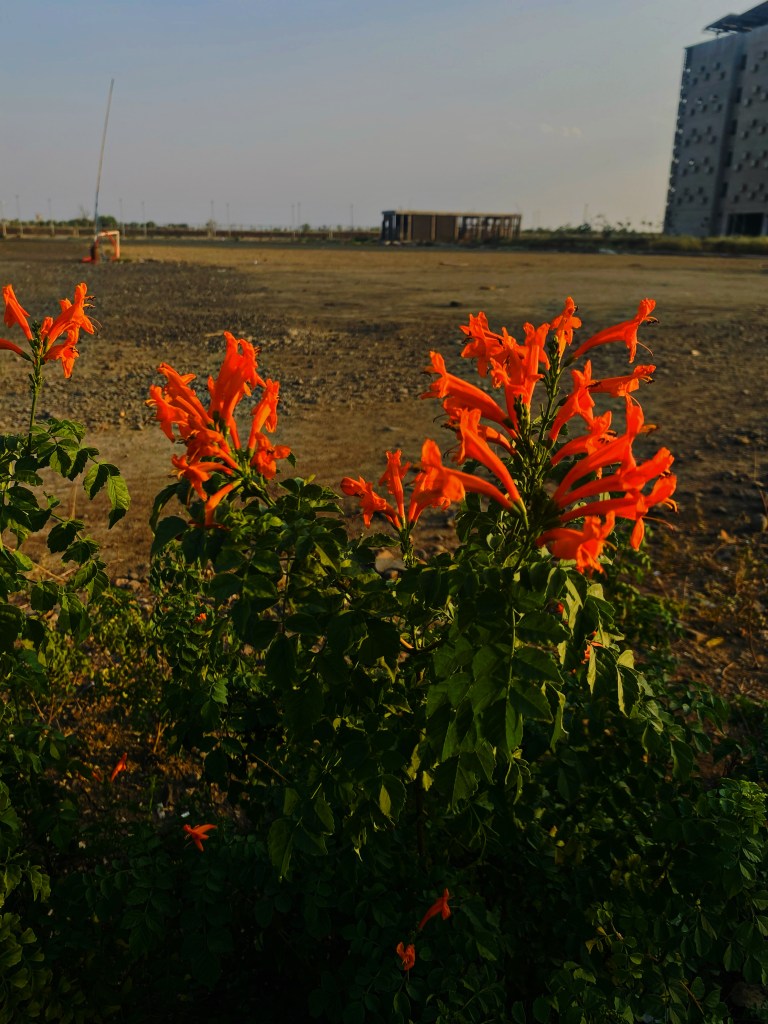
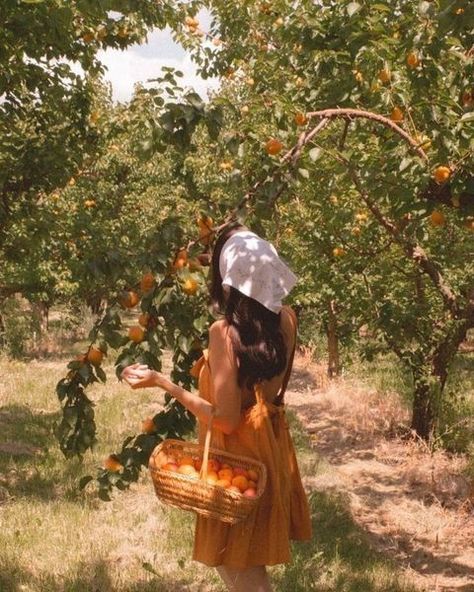
The romanticism of orange flowers can be characterized by the confluence of a multiplicity of evocative features. This chromatic and olfactory combination is imbued with a subtlety and richness that is unparalleled in its ability to evoke a sense of longing and desire.
The hue of orange is inherently linked to warmth, vitality, and dynamism. It is a hue that is undeniably uplifting, evocative of the sun and the fertile earth. The allure of orange flowers is further enhanced by their delicate, intricate structures. The petals are intricately arranged in a symmetrical and harmonious fashion, creating an organic geometry that is both mesmerizing and seductive. When viewed from a distance, the flowers appear as a vibrant orange blur, an ethereal presence that seems to glow with an inner radiance.
However, if one looks at this picture closely then the beauty of the orange flowers might be overlooked by the human race for their eyes shall be focussed on the barren lands behind. The juxtaposition of the orange flowers amidst the dry, barren lands creates a striking visual dichotomy. The vibrant hue of the blossoms seems almost surreal against the dull and lifeless landscape. It is as if nature itself is making a bold statement, asserting its resilience and determination to survive. The flowers’ delicate petals sway in the unrelenting heat, a reminder of the fragility of life, yet also of its tenacity. It is a scene of contrasts, of beauty amidst decay, of hope amidst despair. The orange flowers serve as a beacon of light in the darkness, a small but powerful symbol of nature’s ability to endure and flourish against all odds.
In the presence of the orange flowers amidst the barren land, human tendencies are often marked by a desire to assign purpose to their existence. Questions arise, such as “what is the point of these flowers in such a desolate landscape?” This inclination towards rationalization can obscure the inherent beauty of the scene and reduce it to mere functionality. It is as if we seek to impose our own sense of order onto the natural world, to explain away the inexplicable. Yet the orange flowers defy such narrow-minded thinking, existing simply because they can, a testament to the whims of nature and the beauty that arises from its unfettered expression. In a world increasingly defined by human intervention and control, the orange flowers serve as a reminder of the intrinsic value of the natural world and the importance of embracing the beauty that arises from its inherent chaos.
The orange flowers’ mere presence in a barren landscape subverts the human impulse to impose order and rationality, instead offering a glimpse into the unpredictable, yet exquisite, manifestations of the natural world. It is a display of nature’s raw, unbridled power, a force that has no need for human rationalization or purpose. Rather, it is an entity that is self-sufficient, infinitely complex, and wholly deserving of appreciation in its own right.
“Amidst the barren lands, some orange in flowers blooms,
personifying a flicker of hope in the desolate gloom.
The vibrant hue, acting as a beacon of life
in the midst of an arid terrain, existing as a
testament to nature’s resilience, despite the parched pain.
Each petal, a brushstroke of colour on a canvas of dust and sand,
a masterpiece of contrast, the perfect blend of desolation and grand.
For even in the bleakest of landscapes, life finds a way,
If, as they say, poetry is a sign of something among people, then let this be pre-arranged now, between us, while we are still peoples: that at the end of time, which is also the end of poetry (and wheat and evil and insects and love), when the entire human race gathers in the flesh, reconstituted down to the infant’s tiniest fold and littlest nail, I will be standing at the edge of that fathomless crowd with an orange for you, reconstituted down to its innermost seed protected by white thread, in case you are thirsty, which does not at this time seem like such a wild guess, and though there will be no poetry between us then, at the end of time, the geese all gone with the seas, I hope you will take it, and remember on earth I did not know how to touch it, it was all so raw, and if by chance there is no edge to the crowd or anything else so that I am of it, I will take the orange and toss it as high as I can.
Analysis
“If, as they say, poetry is a sign of something among people, then let this be prearranged now, between us, while we are still peoples:”
The speaker begins by questioning the significance of poetry and its ability to connect people. The phrase “let this be pre-arranged now” suggests a desire to make a meaningful connection with the reader, even if it is at the end of time.
“that at the end of time, which is also the end of poetry (and wheat and evil and insects and love), when the entire human race gathers in the flesh, reconstituted down to the infant’s tiniest fold and littlest nail,”
The speaker continues to imagine a future time when everything will come to an end, including poetry, love, and life as we know it. The phrase “reconstituted down to the infant’s tiniest fold and littlest nail” suggests that even in this future time, the speaker and the reader will be reconnected at the most fundamental level of human existence.
“I will be standing at the edge of that fathomless crowd with an orange for you, reconstituted down to its innermost seed protected by white thread,”
Here, the speaker offers the reader an orange, which represents a gesture of love and connection. The phrase “reconstituted down to its innermost seed protected by white thread” reinforces the idea that even in the future, the speaker and the reader will be connected at the most fundamental level of existence.
“in case you are thirsty, which does not at this time seem like such a wild guess,”
The speaker suggests that the reader may be thirsty at the end of time, and that the orange will be a refreshing drink. This line also highlights the uncertainty and unpredictability of the future.
“and though there will be no poetry between us then, at the end of time,”
The speaker acknowledges that poetry will no longer exist in the future, but the orange will be a meaningful gesture of love and connection regardless.
“the geese all gone with the seas,”
This line suggests a future world in which natural beauty and wonder will no longer exist.
“I hope you will take it, and remember on earth I did not know how to touch it, it was all so raw,”
The speaker hopes that the reader will accept the orange as a symbol of love and connection, even though the speaker did not fully understand its significance during their lifetime.
“and if by chance there is no edge to the crowd or anything else so that I am of it,”
The final lines of the poem suggest a sense of uncertainty about the future and the possibility that the speaker may not be present at the meeting with the reader.
“I will take the orange and toss it as high as I can.”
Despite this uncertainty, the speaker vows to make the gesture of offering the orange, even if it is only to the universe itself. This final line is a powerful image of hope and connection that transcends time and space.
“peeling oranges this, sharing tangerines that, what about cutting and de-seeding pomegranates for the ones you love? the ruby stains on your fingers fleeting proofs of your undying devotion”
“I was compelled to love you, not because you are the fairest, but because you are the deepest, for a lover of mere beauty is usually a fool”
– Mahmoud Darwish (1941-2008).
Coming out of the spiritual and traditional holds of the conventional genres of poetry, the late 18th and 19th centuries provided for a poetic movement that was dedicated whole-heartedly towards the interior worlds of feeling, in opposition to the mannered formalism and disciplined scientific enquiry of the enlightenment era that preceded it. This movement is what is termed as Romanticism. Poets like Mary Shelley, Mary Robinson, Charlotte Turner Smith, William Wordsworth, Samuel Taylor Coleridge, John Keats, Percy Shelley, William Blake, Lord Byron, and so on, are huge examples of this ideology of literature, and produced works that expressed spontaneous feelings, found parallels to their emotional lives in the natural world, and celebrated creativity rather than logic.
The spirit of Romanticism wasn’t just to counter the ideology upheld by the Enlightenment era, rather it was majorly dedicated to celebrating the creativity of life and emotions by the use of metaphors and paralleling the natural world with human emotions, and love being the epitome of the same. Nature is a substantial presence in Romantic poetry, functioning as a teacher and companion. The poets viewed their art as mediation between humanity and nature and would set their human dramas on her stage. The Romantic wanderer and vicariously the reader would learn his or her place in the universe by journeying through nature’s dark spaces and exotic dream lands. The mysterious, monstrous, and strange are all Romantic era poetic predilections.
This romantic era emphasised intuition and imagination over reason, everyday language over inscrutable poetic form, and the pastoral over the urban. Imagination is the gateway to transcendence, and the poet filters powerful emotions and emotive responses, translating them into an accessible poet form. The arguably extreme idealism of Romanticism was characterised by a search for immortality, imperfections and pure love, in parlance with everyday life.
The Sky: An Eternal Muse for Poets
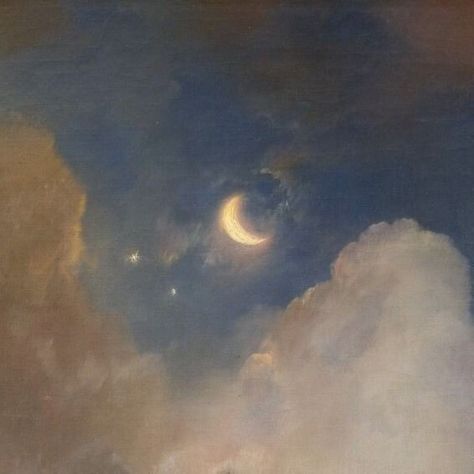
The sky has been an eternal muse for poets and artists alike, its endless expanse serving as a captivating metaphor for the depth and breadth of love. The sky’s vastness evokes a sense of infinity, mirroring the boundless nature of the love that we feel for another. The clouds that dance across the sky are akin to the ebbs and flows of a relationship, representing moments of turbulence as well as serenity. The sunrise and sunset, in all their resplendence, capture the start and end of a love story, embodying the promise of new beginnings and the acceptance of closure. The stars that shimmer in the night sky, like diamonds in the firmament, symbolise the fleeting yet profound moments of happiness shared with our beloved. The moon, in all its mystique and enchantment, encapsulates the magic and transformative power of love, illuminating our path to finding meaning and purpose. Ultimately, the sky reminds us of the universality of love, a force that binds us together and gives our lives greater meaning.
Indeed, the sky continues to inspire and captivate us, with its ever-changing hues and moods. The shifting shades of blue and pink during dawn and dusk reflect the nuances of love, its shades and intensities. The wispy clouds that adorn the sky, taking on a myriad of shapes and forms, are reminiscent of the playful and whimsical nature of love. The thundering clouds and lightning bolts that occasionally pierce the sky are akin to the challenges and obstacles that we must navigate in a relationship. And yet, just as the sky eventually clears after a storm, so too can love endure and thrive despite the challenges that may arise.
Moreover, the sky’s beauty and majesty serve as a reminder of the power of love to transcend our individual selves and connect us to something greater than ourselves. The vastness of the sky reminds us that our love is but a small yet significant part of the grand tapestry of life, a testament to the beauty and wonder of the universe. Whether it is the quiet stillness of a starry night or the vibrant hues of a sunset, the sky is a canvas that reflects the myriad emotions and experiences that love brings into our lives. It is a reminder that love is not just a feeling, but a journey that takes us to new horizons, enriching our lives and elevating our souls.
Flowers: A Reminder that Eternal Beauty and Love are Inseparable
Flowers have long been revered as one of nature’s most exquisite creations, a symbol of love and beauty that transcends cultures and time. Each petal, delicate and intricate, is a testament to the wonder and complexity of life. The vibrant colors that adorn flowers, ranging from soft pastels to bold hues, evoke a sense of vitality and passion that is reminiscent of the intensity of love.
Like love, flowers have the power to transform us, to uplift our spirits and bring joy to our hearts. Their sweet fragrance and gentle sway in the breeze evoke a sense of calm and serenity, reminding us to appreciate the simple pleasures of life. The different varieties of flowers, each with its own unique beauty and symbolism, offer a rich tapestry of emotions and experiences that are akin to the nuances of love.
From the dainty and fragile beauty of a rose to the robust and hearty sunflower, flowers represent the diversity and complexity of love. The intricacy of a lily, with its soft petals and complex patterns, captures the depth and richness of love’s many layers. The velvety texture of a carnation, with its vibrant colours and sweet scent, embodies the sensual and passionate nature of love.
In essence, flowers are a metaphor for love, a reminder that beauty and love are inseparable. They remind us that even in the darkest moments, there is always beauty to be found, a ray of hope that can light up our lives. They remind us that love is not just an emotion, but a force that can inspire us to be our best selves, to see the world in a new and beautiful way. Whether it is a single bloom or a fragrant bouquet, flowers remind us of the power and magic of love, a force that can transform our lives and touch our souls.
Air: An Ethereal Metaphor of Love
The air that surrounds us, invisible yet all-pervading, is a poetic and ethereal metaphor for love. Just as the air is essential to sustain life, so too is love necessary to nourish the soul. The gentle breeze that caresses our skin, cool and refreshing, represents the comfort and warmth that love brings to our hearts.
The air can also be unpredictable and tempestuous, like the ups and downs of a relationship. The winds that gust and swirl, tugging at our hair and clothes, mirror the turbulence and challenges that love can bring. But just as the air eventually calms and settles, so too can love endure and thrive despite the difficulties.
Moreover, the air is a reminder of the intangible yet powerful nature of love. Just as we cannot see or touch the air, so too is love a force that transcends the physical realm. It is a feeling that fills our hearts and souls, giving us the strength and courage to face the world. The air is also a symbol of freedom and liberation, a reminder that love is not meant to be possessive or suffocating. Like the air that allows birds to soar and clouds to drift, love should give us the space and freedom to grow and evolve as individuals.
In essence, the air is a beautiful and evocative metaphor for love, reminding us of the delicate yet enduring nature of this powerful emotion. Whether it is the gentle breeze that cools our skin or the gusting winds that challenge us, the air reminds us that love is a force that can bring us to greater heights and give us courage to embrace life to the fullest.
Clouds: The Ebb and Flow of Love
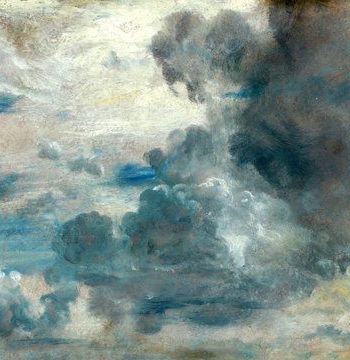
The clouds that drift lazily across the sky are a poetic and enchanting metaphor for love, evoking a sense of wonder and mystery. Like love, clouds come in a multitude of forms and shapes, each one unique and breathtaking in its own way. The delicate wisps of a cirrus cloud, high and wispy, embody the ethereal and intangible nature of love, while the dramatic and imposing form of a cumulonimbus cloud reflects the power and intensity of this complex emotion.
Clouds also have the ability to transform and shape the world around us, much like the way love can alter and shape our lives. The gentle puffs of a cumulus cloud can cast dappled shadows on the ground, creating a sense of enchantment and magic that is reminiscent of the joy and wonder that love can bring. The looming form of a thundercloud, with its dark and ominous presence, is a stark reminder of the challenges and obstacles that love can pose.
Furthermore, the movement of clouds across the sky serves as a metaphor for the ebb and flow of love. Just as clouds drift and move across the sky, so too can love evolve and change over time. The shifting hues of a sunset or the vivid colours of a sunrise, reflected on the clouds, remind us of the endless possibilities and beauty that love can bring.
In essence, clouds are a beautiful and evocative metaphor for love, capturing the complexity and wonder of this powerful emotion. Whether it is the delicate and ethereal wisps of a cirrus cloud or the imposing and dramatic form of a cumulonimbus cloud, the clouds remind us that love is a force that can shape and transform our lives, leaving an indelible mark on our hearts and souls.
Romanticism: A Melody that Stirs Our Heart
Romanticism is the heartbeat of the soul, the melody that stirs our hearts and fills us with a sense of wonder and awe. It is the brushstroke that paints our world with beauty and colour, the spark that ignites our passion, and the fire that drives our dreams. Through romanticism, we connect with the world around us on a deeper level, embracing the complexities and nuances of life with a sense of reverence and awe. It is the force that moves us, the inspiration that drives us forward, and the foundation upon which our most cherished memories are built.
Romanticism infuses our days with meaning and purpose, reminding us of the beauty and majesty that surrounds us at every turn. It is the laughter that bubbles up from within us, the tears that we shed, and the joy that fills our hearts. It is the promise of a new beginning, the hope that fuels our dreams, and the faith that sustains us through the darkest of times.
In essence, romanticism is the soul of our existence, the essence of our being that connects us to the world around us. It is the light that illuminates our path, the magic that makes our hearts sing, and the wonder that fills our days with joy and delight. Without romanticism, life would be a mere existence, a hollow shell of what it could be. But with romanticism, we soar to greater heights, embracing the wonder and beauty of life in all its splendour.
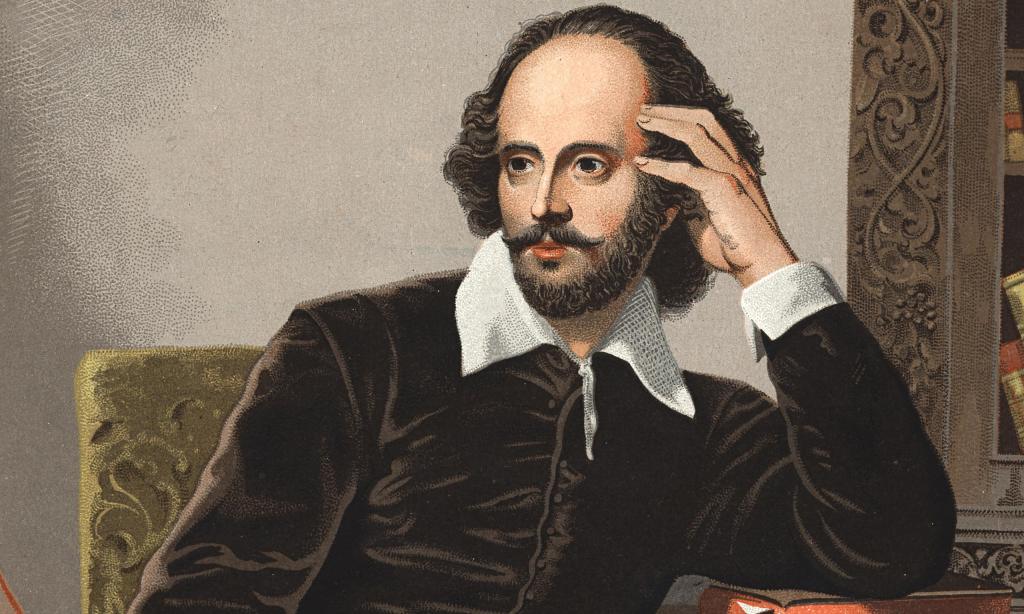
William Shakespeare’s works are instrumental for the emergence of some of the most recognisable writings in the hallowed halls of English literature. In addition, William Shakespeare is credited with the development of a number of the most well-known literary techniques. He is responsible for several well-received works of human drama, comedy, and love sonnets, and the legacy of his work lives on to this day in the form of its effect on authors. The bulk of Shakespeare’s well-known plays and tales were written during the latter half of the 16th century. He spent many years savouring writing comedies and historical plays before he discovered his real love: creating tragic and gloomy dramas such as Hamlet and Macbeth.
Shakespeare’s initial plays are written in the conventional manner that was popular at the time. The use of extended metaphors, parables, and narcissisms, some of which were rather grandiose, was one of his primary storytelling approaches.[1] His writing often came out as verbose and pompous. Shakespeare’s first original comedy, “The Two Gentlemen of Verona”, which was written in 1590, demonstrates a literary style that is underdeveloped and erratic.
This article focusses on analysing and detailing in depth the writing style opted by Sir William Shakespeare in a vast majority of his work. This article aims to study the details in the lyrics produced by Sir William and the objective behind the same, by analysing the Iambic Pentameter and the age old poetic skill of Prosody.
The Iambic Pentameter
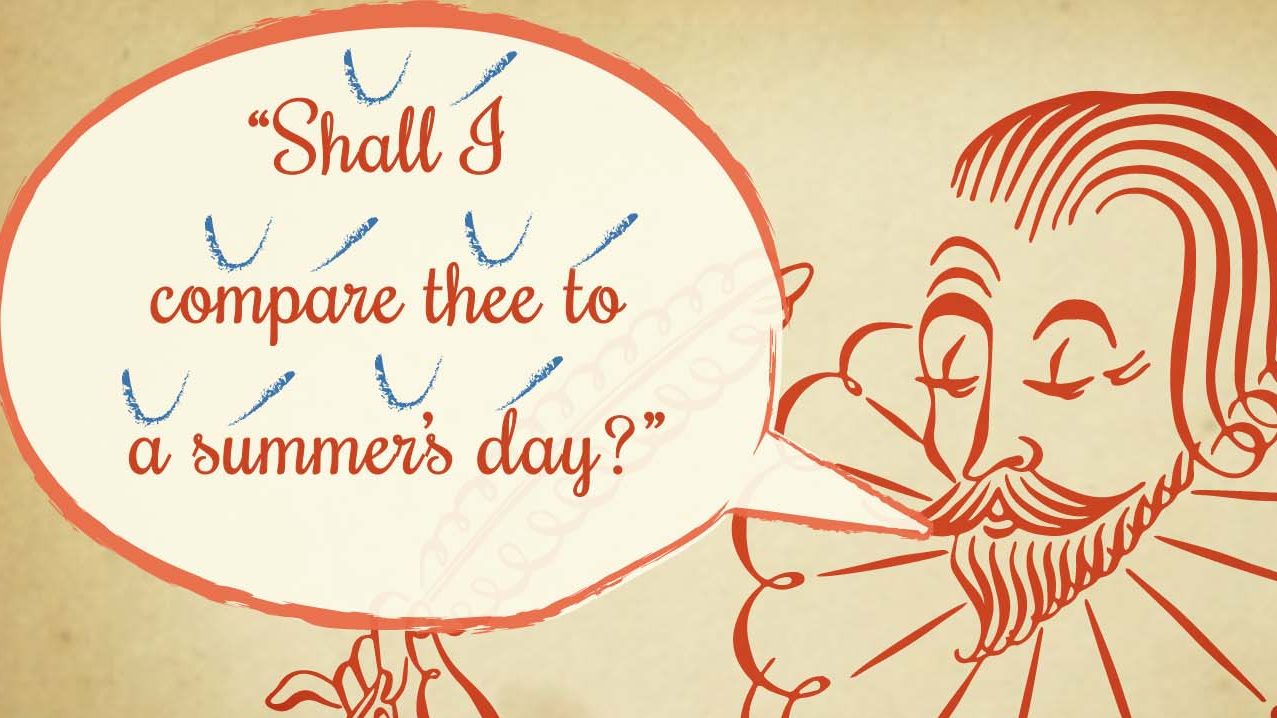
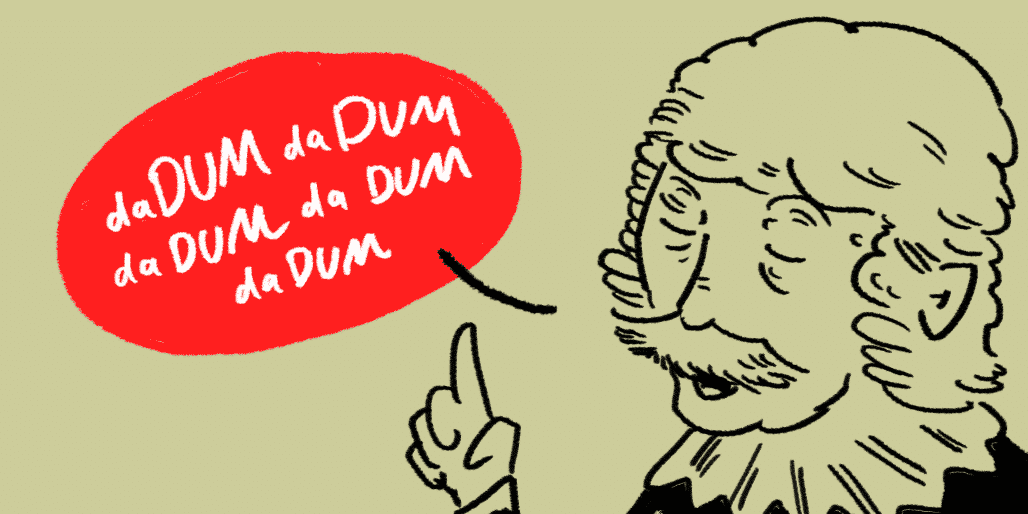
In a line of poetry, an ‘iamb’ is a foot or beat consisting of an unstressed syllable followed by a stressed syllable, or in another words, a short syllable followed by a longer one. The term ‘Penta’ means five, and hence pentameter simply means five meters. The Iambic Pentameter is a line of writing that consists of ten syllables in a specific patten of an unstressed syllable, followed by a stressed syllable.
Playwrights may mimic natural speech patterns in poetry by using iambic pentameter. The rhythm makes the text and the discussion more fluid and genuine. Iambic pentameter, in its simplest definition, is a metrical speaking rhythm indigenous to the English language. Shakespeare probably used iambic pentameter to mimic the pace of daily conversation in his plays, so that his audience would feel as if they were seeing themselves perform.[2]
The versatility of English iambic pentameter to absorb audible fluctuations in stress without disrupting the pattern’s abstract thread is one of its most often highlighted virtues. To imitate the great artists and writers Wimsatt and Beardsley: “It is practically impossible to write an English line that will not in some way buck against the meter. Insofar as it does approximate the condition of complete submission, it is most likely a tame line a weak line”.[3] It was pointed out that there would inevitably be, and that it was desired to have, some friction between the stress patterns of each line and the abstract pattern of meter.
The Artistic Skill of Prosody
One of the major traits of Sir William Shakespeare was his way of using words to manipulate the emotions of his audience, and regulate their attention.[4] This age-old poetic skill in ancient literature is termed as “Prosody”. Prosody is the study of the acoustic and rhythmic repercussions of words, most often in poetry yet often in prose. The word’s origin in ancient Greece suggests that it may have referred to either a song set to music or the way in which a syllable was stressed.[5]
A basic terminology under Prosody is the “iamb”, which means an unstressed syllable followed by a stressed syllable. This pair of syllables can be in a single word or spread across two. Let us take an example of the above from the piece by Lord Byron, titled “She Walks in Beauty”.
“She walks in beauty like the night
Of Cloudless clines and starry skies;”
Now, in Shakespeare’s use of Iambic Pentameter, you can see how rhythmic complexity is building, as each iamb is one part of a larger structure. For example: Refer to this extract from Shakespeare’s “Much Ado About Nothing” –
“What fire is in mine ears? Can this be true?
Stand I condemned for pride and scorn so much?
Contempt, farewell, and maiden pride, adieu!
No glory lives behind the back of such.”
It’s the paradigm that Shakespeare (and the vast majority of English poets since Chaucer) preserved. Because it’s easy to read, resonates in your consciousness, and facilitates you to get into a rhythm.
Keeping in mind the above explained “iambic rhythm”, read the following excerpt from King Lear –
“And my poor fool is hang’d! No, no, no life!
Why should a dog, a horse, a rat, have life,
and thou no breath at all? Thou’lt come no more,
never, never, never, never, never”
Now here in the above-mentioned excerpt, if you keep emphasis on the “never, never” then this is something called a “trochee”. The trochee is the opposite of the iamb; it’s a stressed syllable followed by unstressed (DA-dum). You can’t read it like an iamb; it doesn’t work.
For the same, refer to this excerpt from Macbeth, wherein Shakespeare uses ‘trochaic tetrameter’ as the main poetic meter, which basically means a line of four trochaic feet. In classical meter, a trochee is a foot with an elongated first syllable and a shorter second syllable; in contemporary English poetry, a trochee is a foot with a stressed first syllable and an unstressed second syllable. In classical meter, a line in tetrameter has four Metra, with each Metron consisting of two trochees for a total of eight trochees. A line containing four trochees in the contemporary meter.[6]
“Double, double toil and trouble;
Fire burn and caldron bubble.”
That concludes our discussion of the trochee and the iamb. You can see how the two flows are distinct from one another. Both of these things are referred to as “metrical feet”, which are literally units of rhythm. Poets rely on linguistic foundations akin to this as the primary source of sustenance and inspiration for their work. But those two things aren’t necessarily incompatible with one another. Shakespeare often blended the iamb and trochee (or, indeed, other metrical feet) to manage the tempo at which we speak or read his works.
Now keep all the above discussion in mind, and read the following excerpt which is the Macbeth’s final soliloquy –
Tomorrow, and tomorrow, and tomorrow,
Creeps in this petty pace from day to day,
To the last syllable of recorded time;
And all our yesterdays have lighted fools
The way to dusty death. Out, out, brief candle!
Life’s but a walking shadow, a poor player,
That struts and frets his hour upon the stage,
And then is heard no more. It is a tale
Told by an idiot, full of sound and fury,
Signifying nothing.
There’s a lot happening here, but the alternating iamb and trochee rhythms will stand out to you the most. You’ll find yourself in a groove, moving swiftly down a string of iambs or trochees, only to come to a standstill as the meter changes. Like being propelled forward by a force you can’t see while you read. This is something Shakespeare did throughout his strenuous episodes. The speed may be slowed and kept under control by combining metrical feet, which causes the speaker to accentuate certain words.[7]
“Tomorrow, and tomorrow, and tomorrow”, is an awkward, slow beginning. It drags on, dovetailing with Macbeth’s meaning.
We hit a good run here:
“And all our yesterdays have lighted fools
The way to dusty death”.
But then:
“Out, out, brief candle!”
We are wrenched away from the flow – almost like a train of thought – interrupted by this sudden, formless shout. Macbeth’s despair comes alive.
We pick up pace again with:
“That struts and frets his hour upon the stage,
And then is heard no more”.
But then the rhythmic flow starts to go awry. It moves from poetic meter to mere speech, from order to chaos, and ends with:
“Signifying nothing”. The words land.
Conclusion
This is prosody, the rhythmic use of language. Shakespeare had complete command of this unseen influence, which directs the feelings and focus of both the presenter and the receiver.
Shakespeare’s metrical changes, including crescendoing counterpoint, intertwining lines, and everything else, seldom, if ever, transmit meaningful semantic detail to audiences. However, they do provide for a stimulating mental setting, one in which the mind is continually prompted to react to novel input. Substantially unharnessed metrical patterns make up this setting; they don’t provide encoded signals, but they do constitute an autonomous order with their own unique cognitive demands and rewards.
To some extent, Shakespeare is responsible for shaping contemporary Western language and etiquette, which may explain why Huxley made him the antagonist of Brave New World. His greatness lies in the fact that he skilfully incorporated the themes, motifs, allegories, and metaphors of his many sources, notably his Greek and Latin heroes like Seneca and Ovid, into his poetry and reworked them to create something entirely new.
[1] Mark Womack, Shakespearean Prosody Unbound, 45 TEXAS STUDIES IN LITERATURE AND LANGUAGE 1, 15.
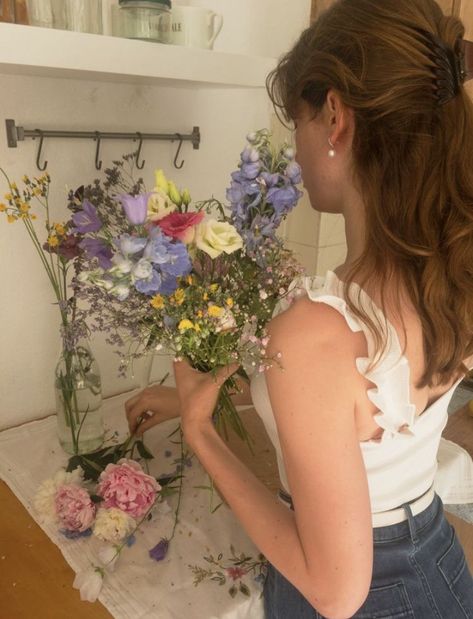
You can find the tiniest bits of romanticism in places or objects or beings, that you might have never thought of before. Yes, Romanticism exists, for as humans, Love is the thing we do the best.
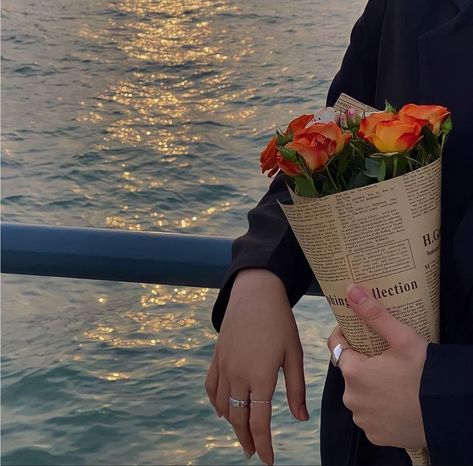
For you I want to share this cozy evening in a wintered Tokyo, and peel oranges, sharing a half with you and then you asking for the other as well for you want the warmth. I love you for life and still can’t say that for I know I’ll lose you, but here I am wanting to spend more time with you, wanting to peel one more orange with you.
The greatest lovers in the history of Romanticism have had the opportunity to love in ways they wanted to but did what they had to for they never wanted the love to fail, and I love you.
“… peeling oranges this … sharing tangerines that … what about cutting and de-seeding pomegranates for the ones you love? the ruby stains on your fingers … fleeting proofs of your undying devotion …”
Yes, peeling an orange with you today, and everyday is everything this lover of yours has ever hoped or wished, wishes for because you are the most beautiful piece of poetry that I have ever read. You’re the juice to my orange and I shall write poems for you no matter how much time it takes for you to love me.
All hopeless romantics are idealists, sentimental dreamers, imaginative and fanciful when you get to know them.They often live with rose colored glasses on. They make love look like an art form with all the romantic things they do for their special someone.
For her. So I speak in a language she doesn’t know. “Je t’aime. Aujourd’hui. Ce soir: Demain. Pour toujours. Si je vivais mille ans, je t’apparti-endrais pour tous. Si je vivais mille vies, je te ferais mienne dans chacune d’elles”
I love you. Today. Tonight. Tomorrow. Forev-er. If I were to live a thousand years, I would belong to you for all of them. If I were to live a thousand lives, I would want to make you mine in each one.
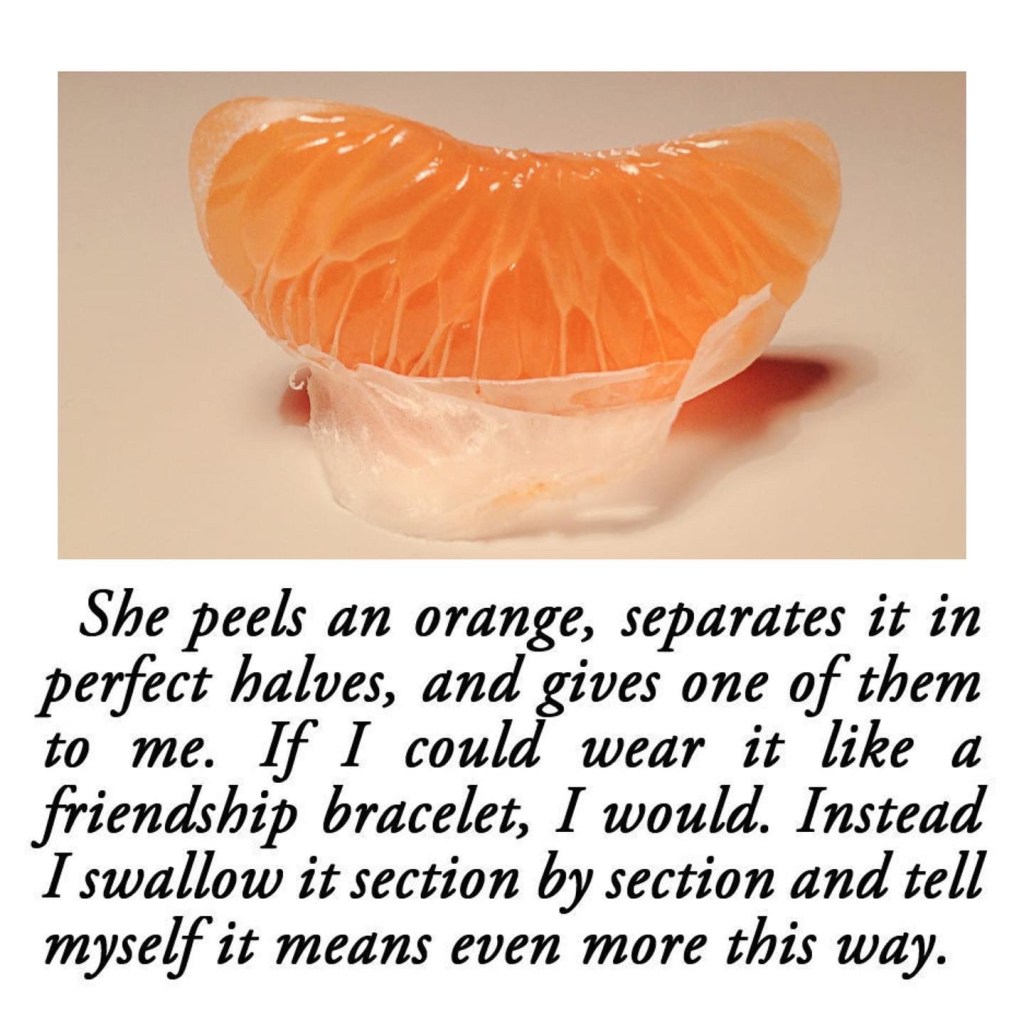
I don’t want to “have” a “conversation” I want to peel an orange and share it with you.
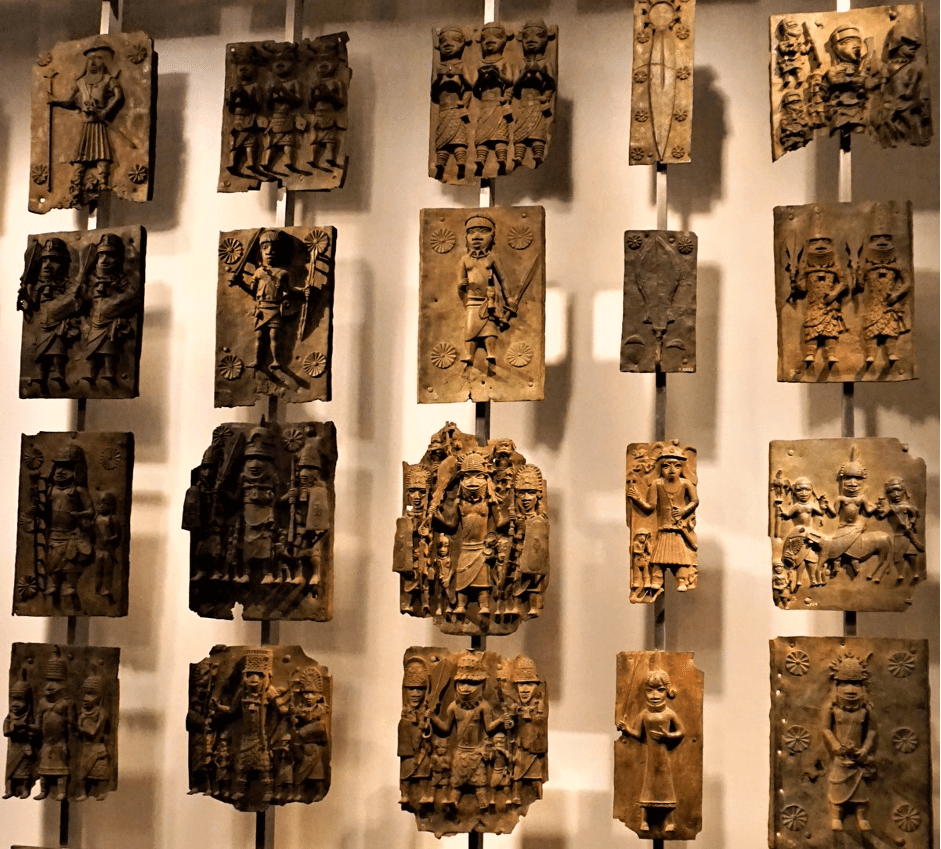
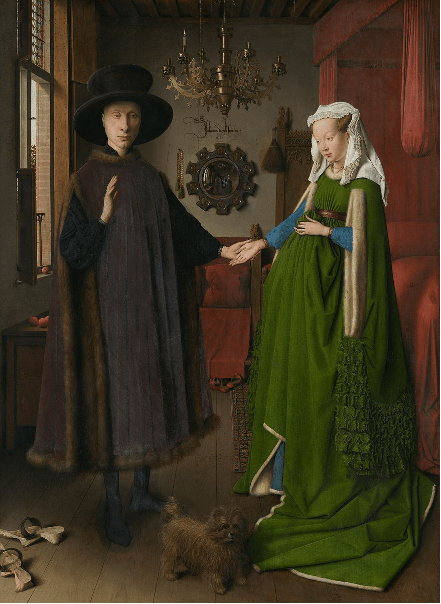
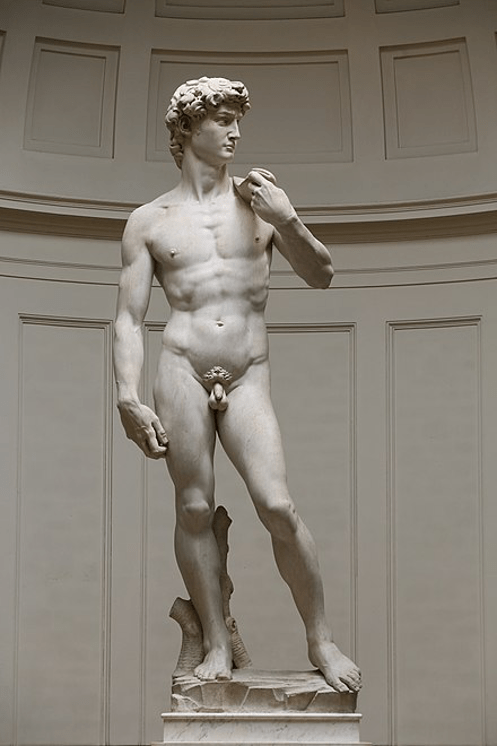
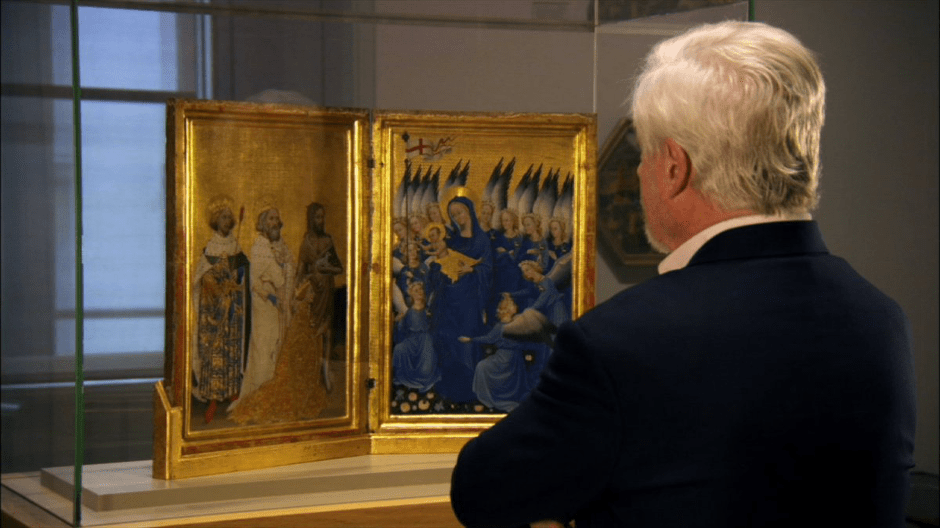
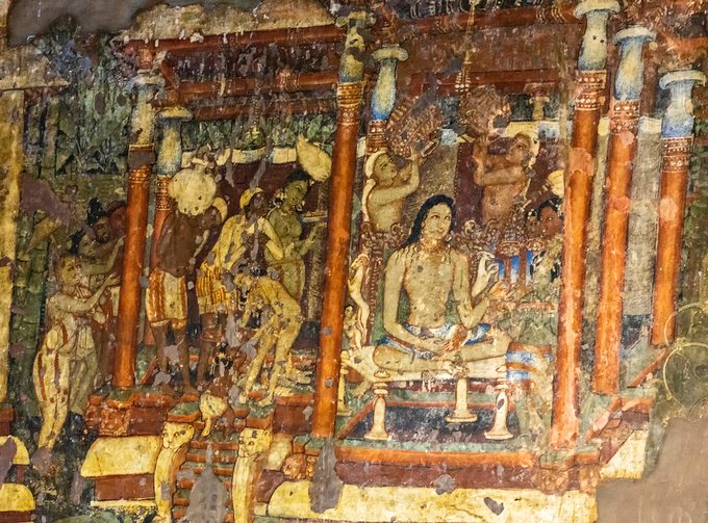
What is Art? Well, there are two main definitions. Number 1 is any human creative endeavour, whether literature or music or anything else. Number 2 is more specific – the “visual arts”. But the trouble with that second definition of Art, the type we imagine in galleries and museums, is that it never really existed. Galleries and museums are beautiful places for sure, but they can easily make us forget that art almost always had a specific context.
They might make it seem like art doesn’t have a setting or an objective, both of which are important to understand. That is to say, it wasn’t made with the intention of being shown in a museum where it would be seen, examined, and evaluated as “Art” in isolation. The Benin Bronzes, for example, which can be seen in collections all over the globe, provide a clear illustration of this phenomenon. These were made in the Kingdom of Benin (present-day Nigeria) between the 13th and 18th centuries to serve as palace decorations and as a cultural chronicle of the kingdom’s history.
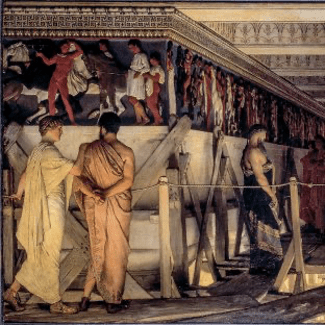
This is also true of the Parthenon Friezes, created in about 440 BC by the sculptor Phidias to decorate the brand-new Parthenon in Athens, a temple at the heart of the city. It wasn’t just “art”; it had a place and a function, a symbolic and religious meaning.
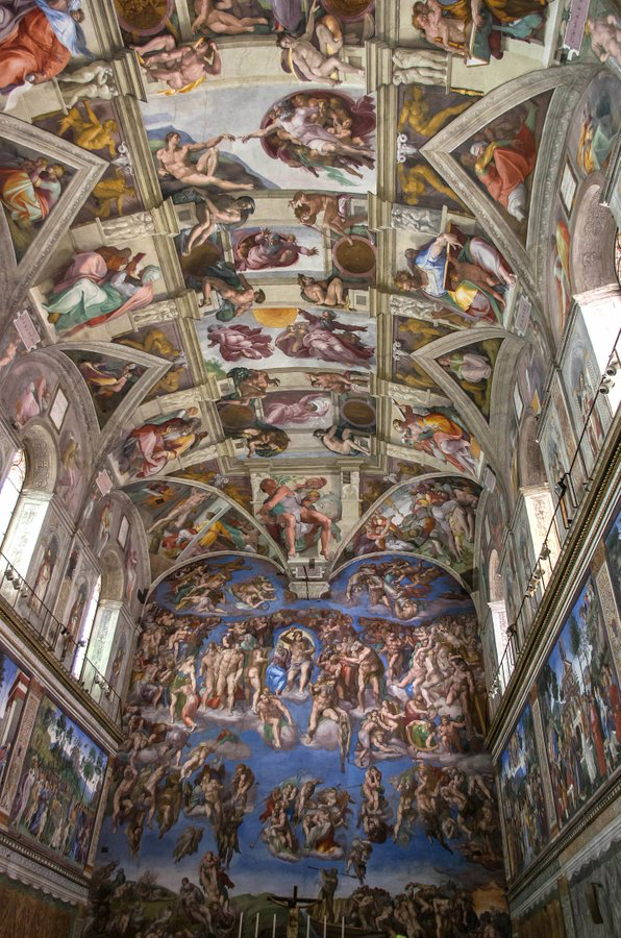
There are less egregious examples. Michelangelo’s Creation of Adam, from about 1511, is one of the world’s most famous images. But it was painted on the ceiling of the Sistine Chapel, a place of religious worship. Seen on its own in cropped images, such context is lost.
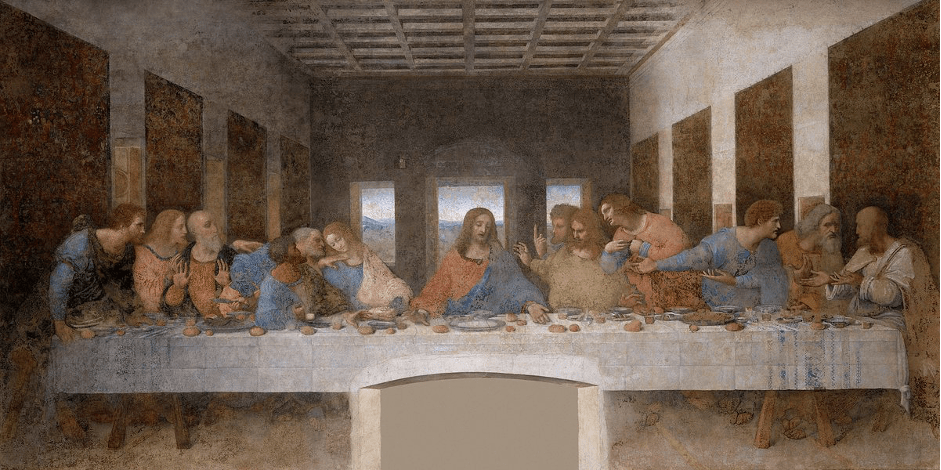
Leonardo’s Last Supper, immortalised in popular culture, is another case in point. This is the image we are accustomed to seeing:
But, in the 1490s, Leonardo painted it on the walls of a refectory in Milan. This was a dining room where the monks of the convent would come together to eat, with Jesus and the apostles eating right alongside them.
It even goes for portraits. Like Jan van Eyck’s masterful Arnolfini Portrait, created in 1434 to mark the marriage between an Italian merchant called Giovanni Arnolifini and his wife. Which would then have a place in the couple’s home to remember the occasion of their wedding.
Michelangelo’s David was originally commissioned to be placed on the roof of Florence Cathedral. But it was too heavy to haul up, so they placed it outside the Palazzio Vecchio in 1504, Florence’s town hall, with that famous gaze directed towards Rome, Florence’s rival.
And it was only in 1873 that David was moved to his current location in the Galleria dell’ Accademia. Still a symbol of Florentine identity, of course, but somewhat shorn of the original political-artistic statement he once made.
And then, on a smaller scale, are the great Gothic works of art like the Wilton Diptych, painted in the 1390s for the personal use of King Richard II of England in prayer and worship. This art wasn’t for art’s sake; it had a function.
While the wonderful Ajanta Murals, painted between about 200 BC and 600 AD in the astonishing rock-cut temples and chambers in Maharashtra, India, record the life of the Buddha, his followers, his teachings. They weren’t just made to be pretty; they told an important story.
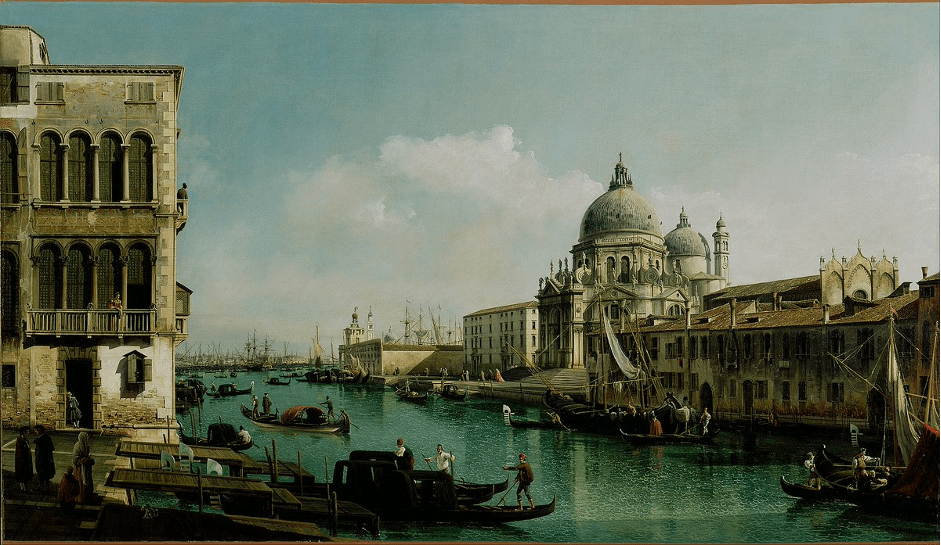
In the the 17th and 18th centuries the “vedutisti”, led by Canaletto, produced magnificent, highly-detailed cityscapes. But these were a sort of pre-photographic souvenir for tourists (usually rich Englishmen in those days) to take home as a memory of the places they’d visited.
The point here isn’t that art can’t be enjoyed or loved or appreciated without knowledge of its original purpose. Indeed, the mark of all truly great art is to exceed its context and reach a sort of universal truth or beauty which speaks to us directly. But it’s important to remember the link between art and its socio-cultural context; that humanity’s creative endeavours have always had a purpose. Seen in galleries or simply as images we are in danger of separating “art” from the rest of human civilisation.
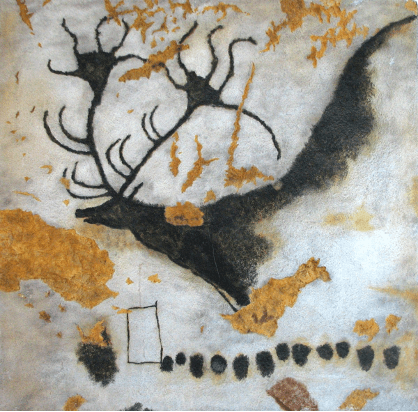
What might we imagine was the purpose of the oldest art we know? We can never be sure what prehistoric cave paintings like those in Lascaux, France, from 19,000 years ago, were intended for. But we can guess!
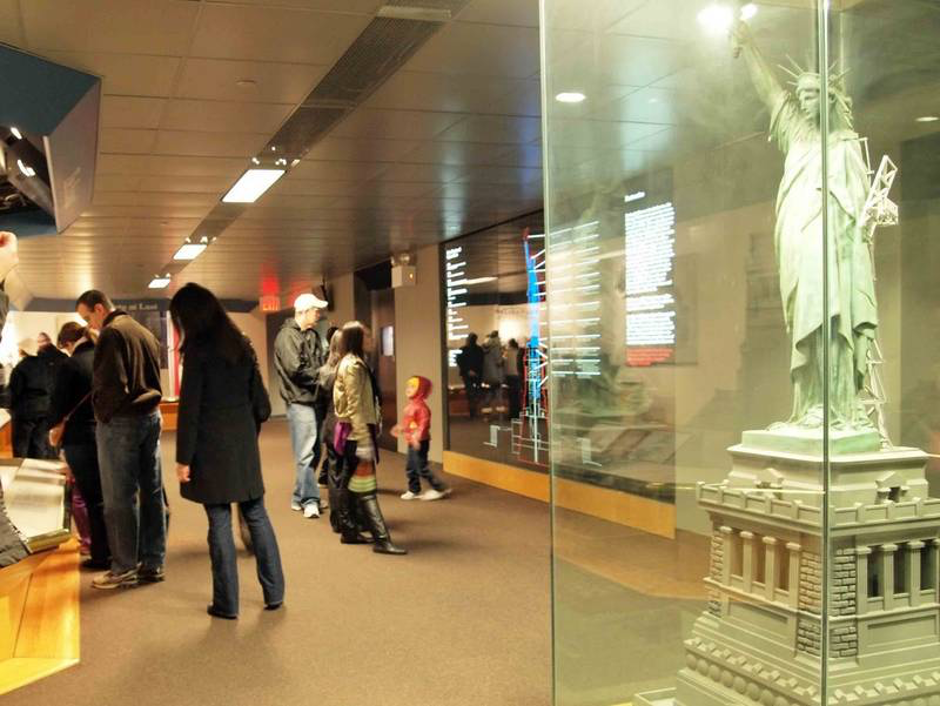
Because, even though it’s been millennia, we’re still doing the same thing. Why do individuals go through the trouble of decorating their homes? It’s possible that this was the same motivation that drove our ancestors to decorate the cave walls all those years ago. Art not only honors and symbolizes significant events, but it also serves to remind us that we are beings of meaning in addition to biological make-up. Because of this, even the most well-known works of art have a distinct function and setting, whether it be Leonardo da Vinci’s The Last Supper displayed beside the monks at lunchtime or the colorful magnets on your refrigerator. It is not something that exists separate from society; rather, it is an integral element of society. Take for example, the question of whether or not the Statue of Liberty may be considered a work of art. Obviously, this is the case, but there is also “more” to it. Imagine it displayed in a gallery or a museum behind a glass case, similar to how the Benin Bronzes or the Parthenon Friezes are shown.
Doesn’t seem quite right, does it?
This post is uploaded and detailed by The CULTURAL TUTOR on TWITTER.
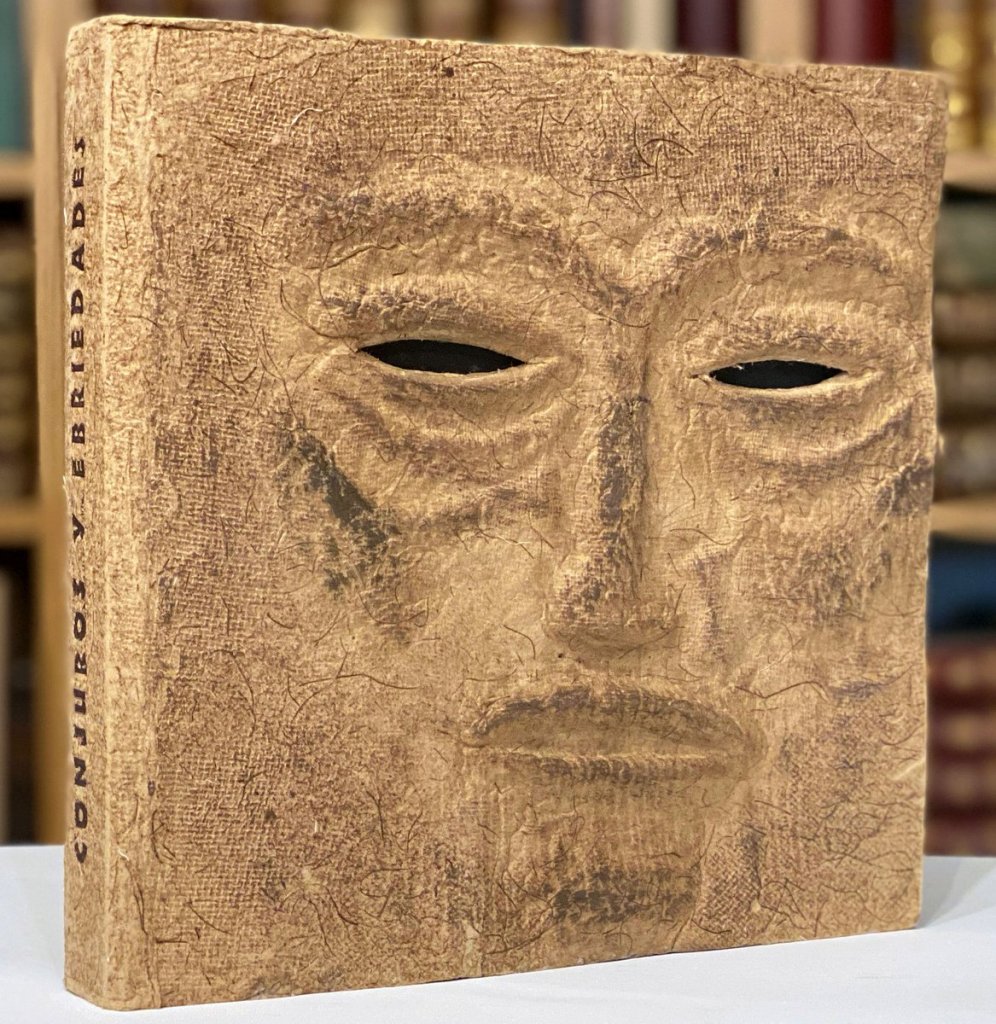
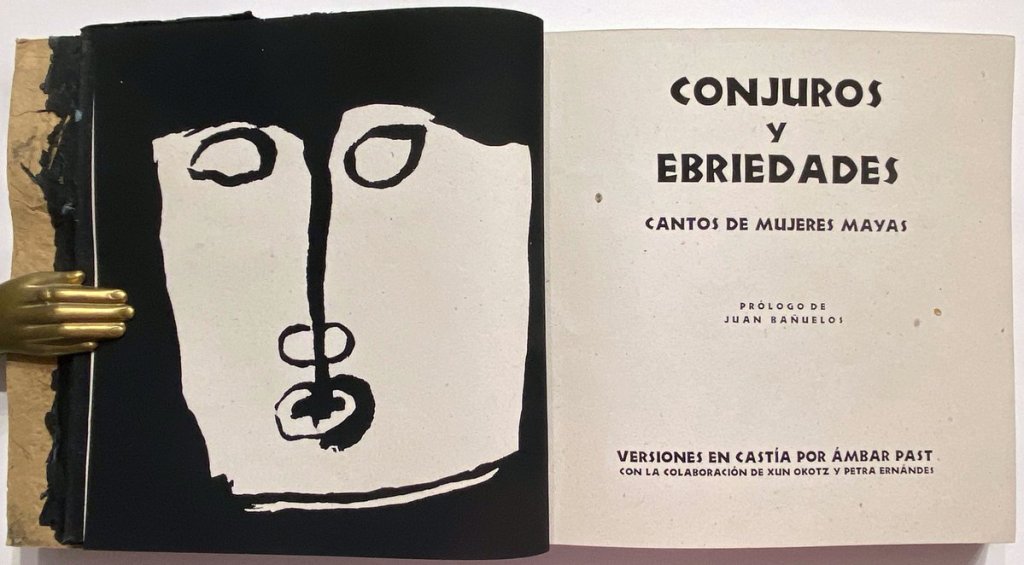
This is the first book created, written, illustrated, printed and bound in paper of their own making, by indigenous Mayan people in nearly 500 years. This book is referred to as “Conjuros y ebriedades: cantos de mujeres mayas”, which translates to “Spells and drunkenness. Songs of Mayan women”. This book of Mayan artists is a collection of spells, hymns, and enchantments. It was originally written in the Tzotzil language, which is a Mayan dialect. The texts were later transcribed and translated by the poet Ambar Past, who said, “We get our ideas from the earth: we copy the fossil of a tropical leaf and the surface of a sea snail.” Elena Poniatowska says, “Conjuros y ebriedades is one of the hundred most beautiful books in the world. The cardboard face breathes, looks through the slits in its eyes, and speaks with its open mouth inside the paper.” One tremendous trait of the book is that if we hold the book in our hands, the eyes look at us. (Refer Image 1)
Image 1
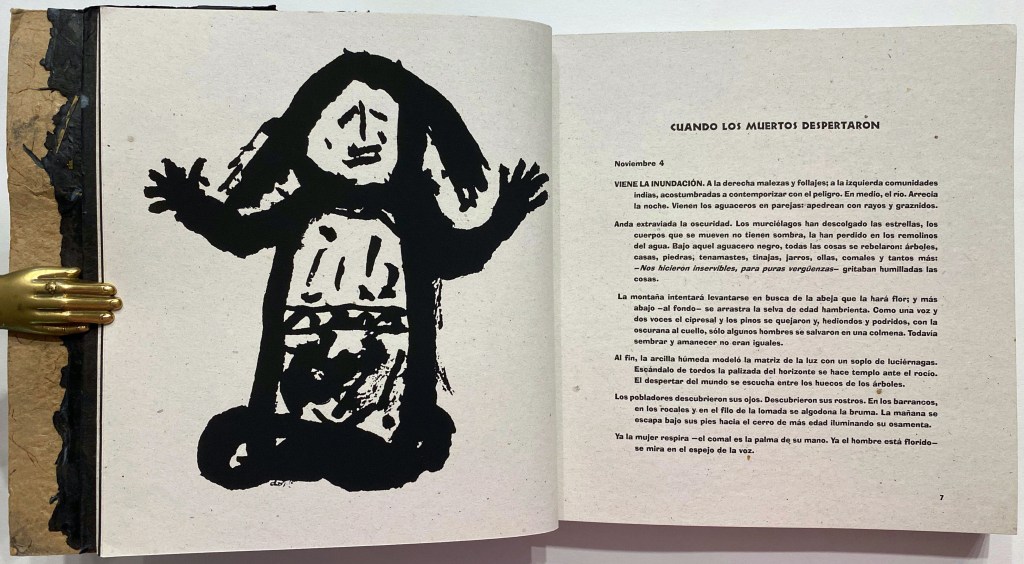
The Taller Leñateros that publishes it, is a community of Mayan artists, founded in 1975 by the poet Ambar Past. His specialty is handmade paper, artist books, serigraphy and engraving (on wooden blocks and similar surfaces), pansey graphics, natural inks, etc. This book, 20 years in the making, records the traditional oral poetry of the local Tzotzil & Tzeltal people. (Refer Image 2).
Image 2
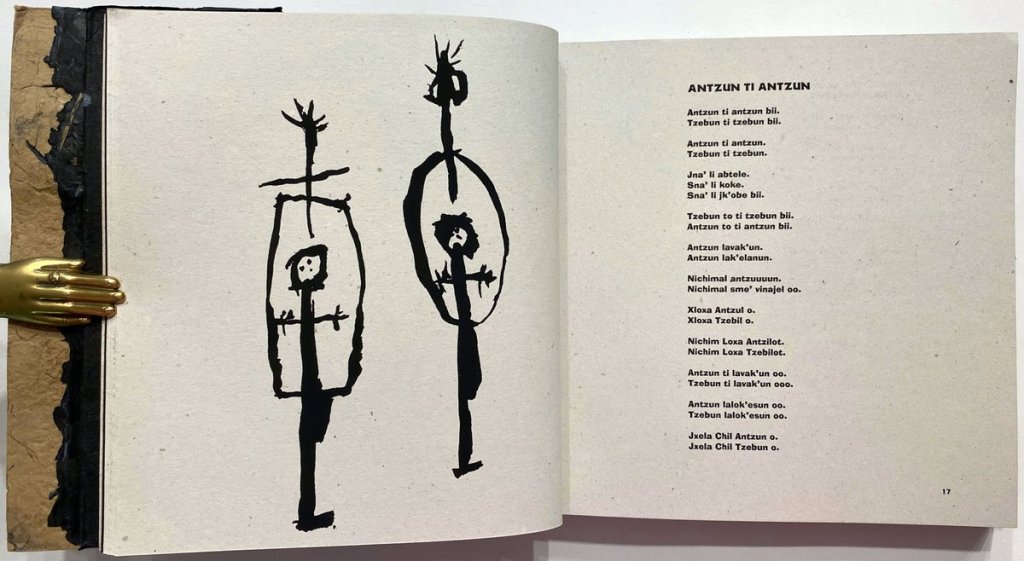
The finished volume has 190 pages and 50 silkscreen illustrations by Tzotzil & Tzeltal women. The end papers are recycled paper with palm fronds, logwood and soot added. The three-dimensional cover is cast from paper made of recycled cardboard boxes, corn silk and coffee. Bound in boards covered with handmade brown paper, with a large face in relief representing the Mayan goddess of the desert filling the cover. The final pages are also handmade. Housed in a cardboard box printed with white title on the spine panel. It contains 45 poetic charms, 40 xerographed illustrations, among other various illustrations.
Image 3
The monologue is written in Spanish, while the poems are written in Tzotzil and have Spanish translations. About 400000 native Tzotzil Maya people in the Mexican state of Chiapas speak the Maya language Tzotzil. Most people who speak Spanish do so as a second language.
Image 4
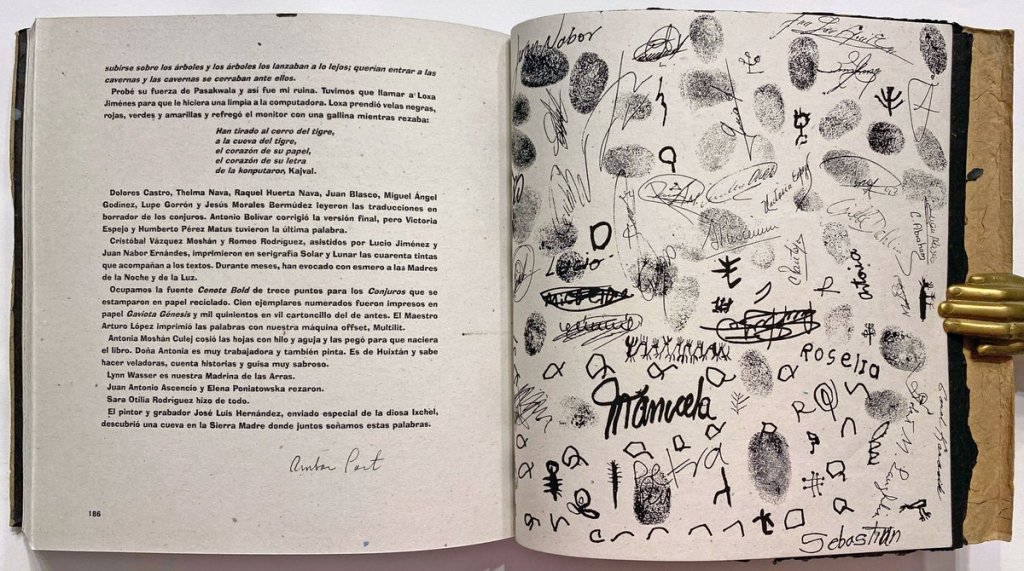
Most moving of all is the colophon, with the signature of Ámbar Past, and the signatures, personal marks & thumbprints of all the Mayan women – there are 150 in the collective – who assisted in the transcribing of the poems, and in the making of the book.
Image 5
In the words of Ambar Past, “These spells and intoxicants were dreamed by Mayan women from the highlands of Chiapas. The Tzotzil authors of this book do not know how to read. They claim that these songs were given to them by their ancestors, the First Mothers, who keep the Great Book where they keep the spells. Loxa Jiménes Lópes, from Epal Ch’en, Chamula, says that an Anjel, daughter of the Owner of the Caves, began to speak in his ear and then in a dream showed him the Book with all the words of the songs”.
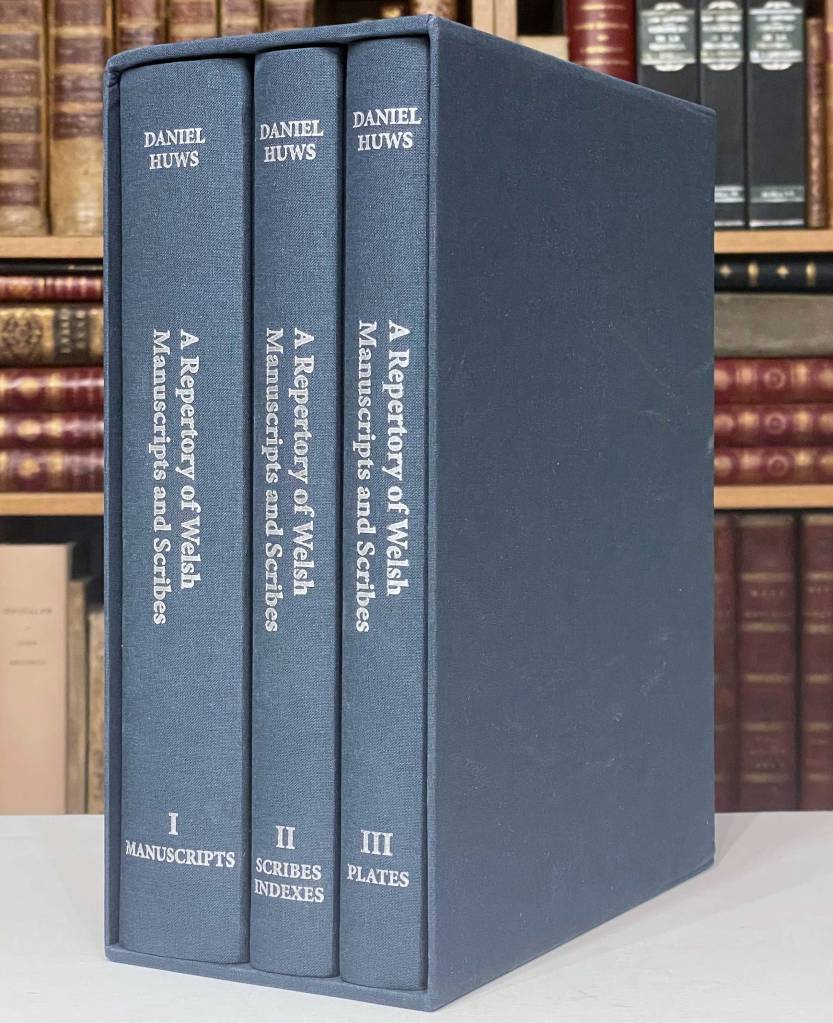
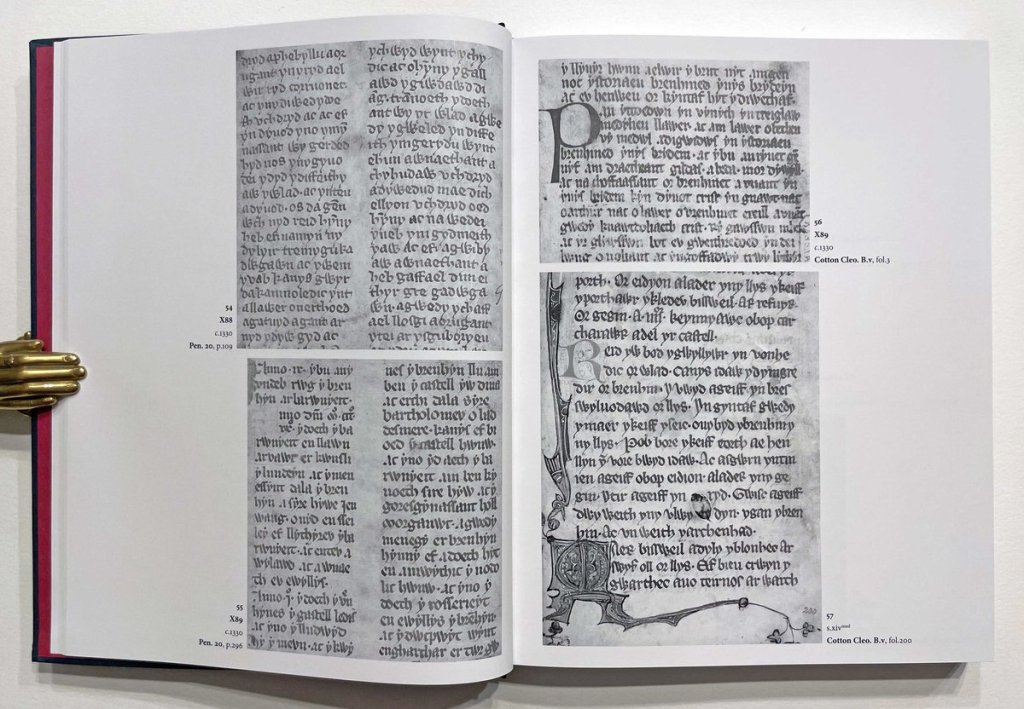
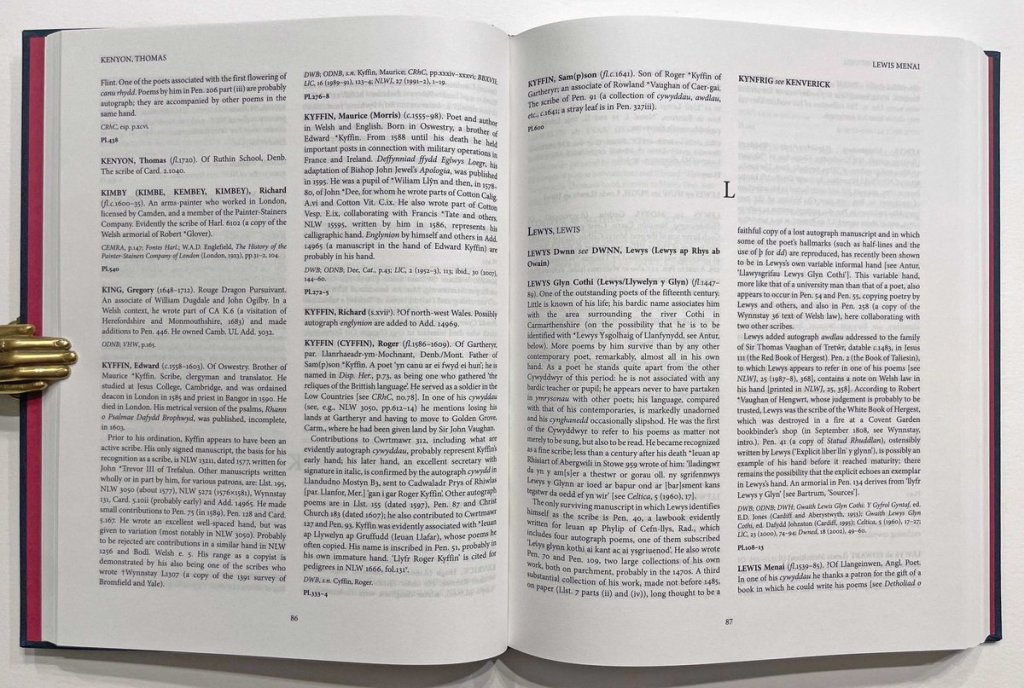
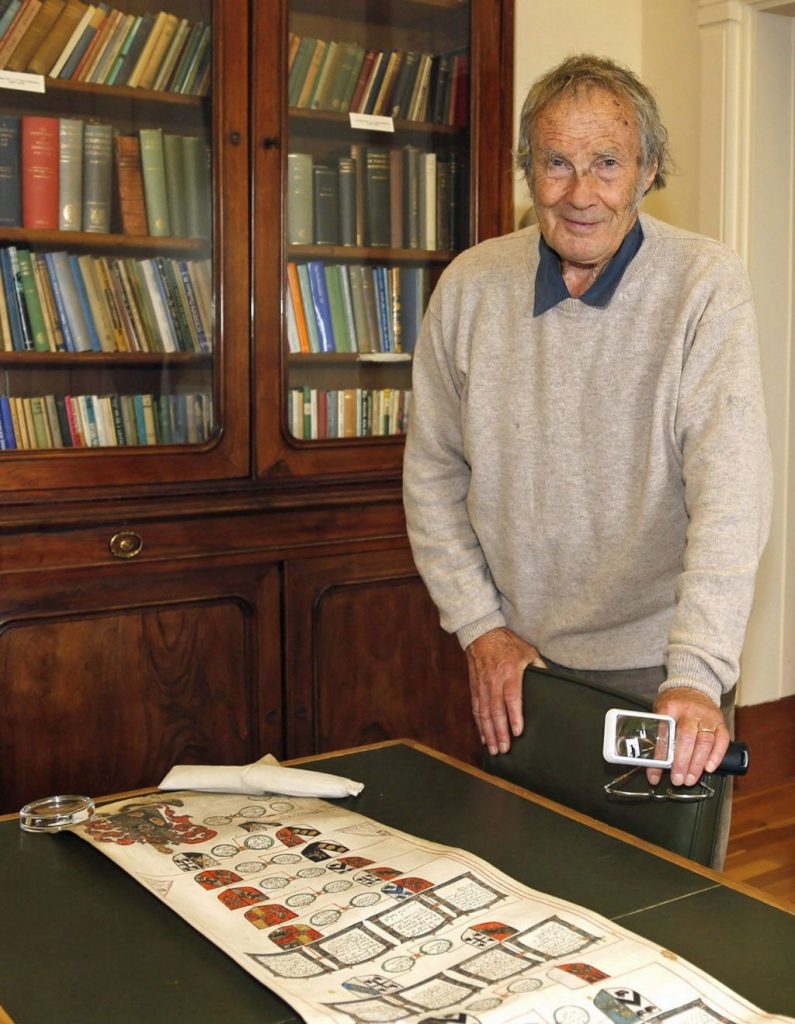
It is not often that a reference book that is only produced once a Centennial is released, but “A Repertory of Welsh Manuscripts and Scribes c.800–c.1800” by Daniel Huws is precisely that kind of literature. The research into Welsh manuscripts will be completely transformed as a result of these three enormous volumes, the production of which took more than 25 years to complete. The author of the work is Dr. Daniel Huws, former Keeper of Manuscripts and Records at the Library and chief scholar of Welsh manuscripts.
The Three Volumes, A Repertory of Welsh Manuscripts and Scribes, Daniel Huws
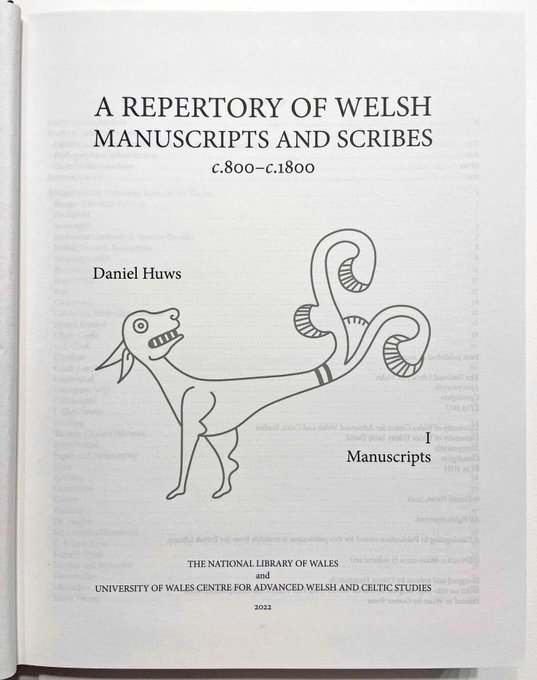
Volume 1
From the earliest Welsh additions in the Lichfield Gospels to the publication of the Myvyrian Archaeology, the first volume of the Repertory provides summary descriptions of approximately 3,300 manuscripts written in Welsh between approximately the centuries 800 and 1800. This includes manuscripts written in other languages that relate to Welsh literature and learning.
Manuscripts were the primary mode of transmission of the greater part of Welsh literature until the appearance of the Myvyrian. The Repertory embraces manuscripts written in Welsh, whether literary or relating to the branches of learning in which there was Welsh tradition: cosmology, genealogy, history, religion, law, science, medicine; manuscripts of Welsh provenance containing cognate texts written in Latin and English are also included.
With regards to the contents of manuscripts, the Repertory aims to supplement but not to supersede previous detailed catalogues, most notably the masterly work of J. Gwenogvryn Evans in his Reports on Manuscripts in the Welsh Language (1898-1910), where some 900 manuscripts are catalogued. Besides its aim of providing reference to later scholarship, the Repertory offers much that is new with respect to the structure of manuscripts, their script, their dates, their textual relationships and provenance, and, above all, to identification of their scribes. The volume is arranged, firstly, by location (Aberystwyth-Warwick), then by library or record repository, and then by collection or class. The major collections are introduced by an account of their growth and later history.
The Cover of Volume 1
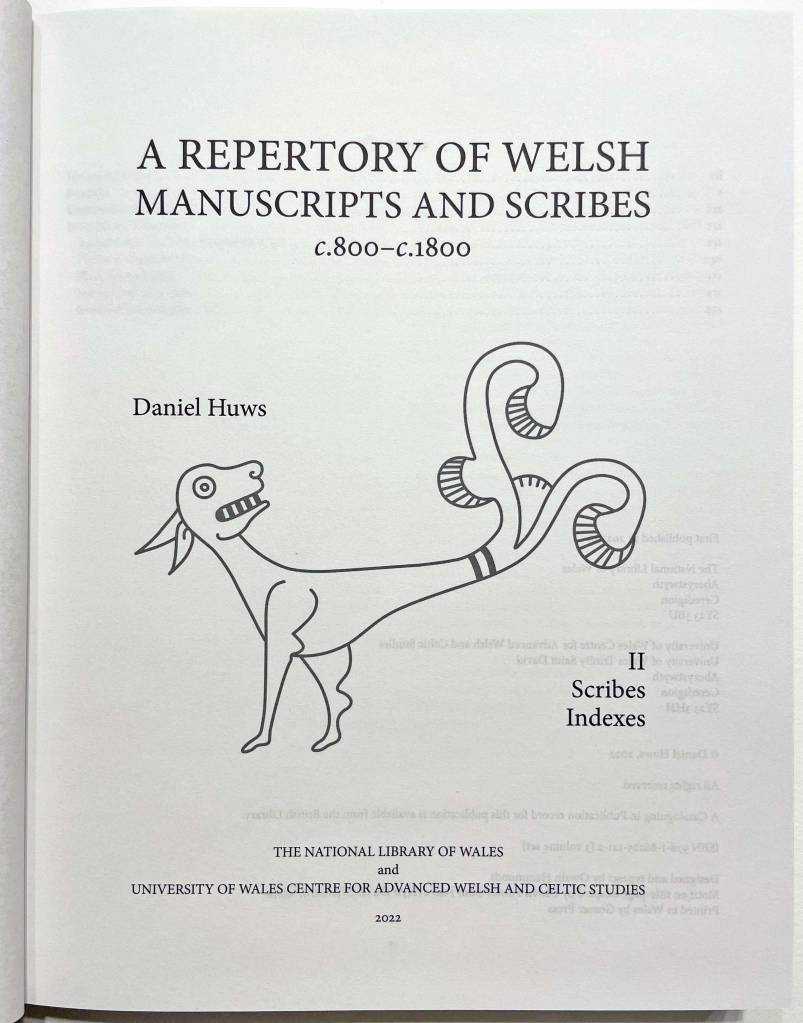
Volume 2
The second volume of the Repertory offers in the first place summary accounts of about 1,500 scribes known by name and anonymous ones whose hands have been recognized in two or more manuscripts, designated XI-X180. skeleton of biographical data is provided, so far as possible, for each scribe, including much new information from manuscript and archival sources.
The scribes’ interests and scribal activities are characterized; manuscripts contributed to are listed, as are any owned or otherwise associated with the scribe. Hundreds of hitherto unknown scribes worthy of study will emerge from the Repertory. But hardly any of the best known scribes will emerge without receiving credit for new manuscripts. Authors as well-studied as Lewys Glyn Cothi, William Salesbury and John Prise now have revealing new manuscripts to their names.
We can now for the first time read poems by Tudur Aled, Roger Kyffin and Rhys Cadwaladr knowing them to be autograph. Recognition of the handwriting of scholars as notable as Maurice Kyffin, David Powel, Nicholas Robinson and Robert Davies of Gwysaney will lead to overdue appreciation of their important historical compilations. Vol. II also includes the indexes to Vol. I. These occupy 250 pages and comprise an index of personal names, an index of place-names, an index of subjects and texts and a chronological table of manuscripts to 1547. The subject index will be of particular value in relation to the history of the book trade, with its comprehensive gathering of references to libraries and catalogues, auctions and sales.
The Cover of Volume 2
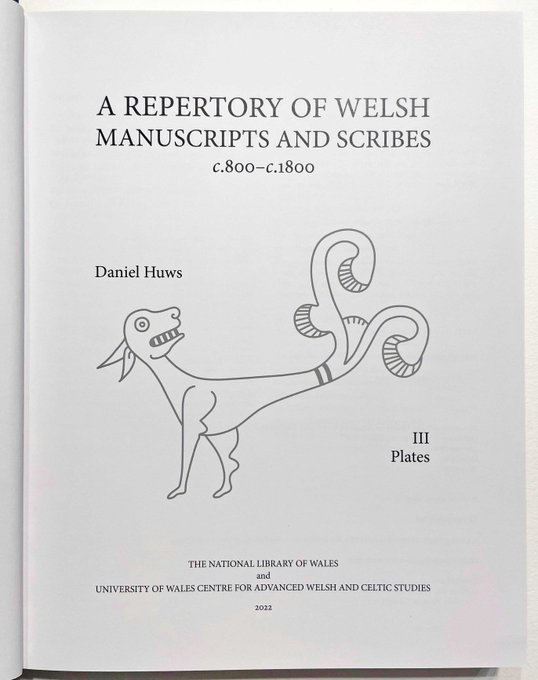
Volume 3
A volume offering over 1,000 specimens, all reproduced to their actual size, of the scripts of about 750 of the most significant scribes included in Vol. I, along with a selection of scribes (mostly medieval) of the highest importance whose hands only appear in a single manuscript. Most scribes are represented by a single specimen; however, scribes such as John Jones of Gellilyfdy and Robert Vaughan of Hengwrt who practised a variety of scripts and scribes whose hands changed markedly over the years may be represented by as many as nine.
Examples that represent a number of scribes are included in this volume by virtue of their being somewhere on the scale that ranges from probably’ to possibly. Those that, for instance, represent Dafydd ap Gwilym, Gruffudd Gryg and Dafydd ab Edmwnd stand to be challenged. Much care has been taken to try so far as possible to find examples that are dated or datable and examples that include a signature. This volume will be of abiding value to palaeographers, also no doubt to collectors of early books.
This volume may become a place of frequent resort as an album of the autographs of a host of famous writers of Wales, from Rhygyfarch ap Sulien to Jac Glan-y-gors, from John Wynn of Gwydir to Iolo Morganwg. Readers will be able to wonder at the calligraphic skills of leuan Llwyd ab Edward and George Owen Harry, and the many who cannot resist the urge to read character into a person’s handwriting will find endless edification.
The Cover of Volume 3
Conclusion
It’s safe to say that nothing of comparable importance on Welsh manuscripts will be published in our lifetime. Daniel Huws’s Repertory is a milestone in Welsh scholarship, and will be a fundamental resource in the study of Welsh history, language, literature & palaeography.
The Repertory is not available – at least not yet – from any booksellers I know, and cannot be ordered online. You need to order Daniel Huw’s magnum opus by phone or email direct from the National Library of Wales in Aberystwyth, details here: https://library.wales/repertory.
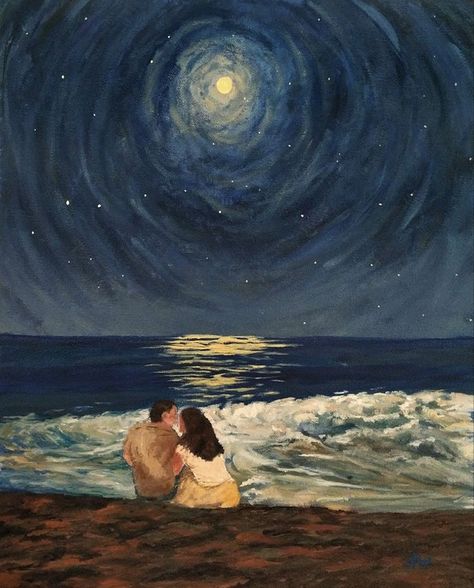
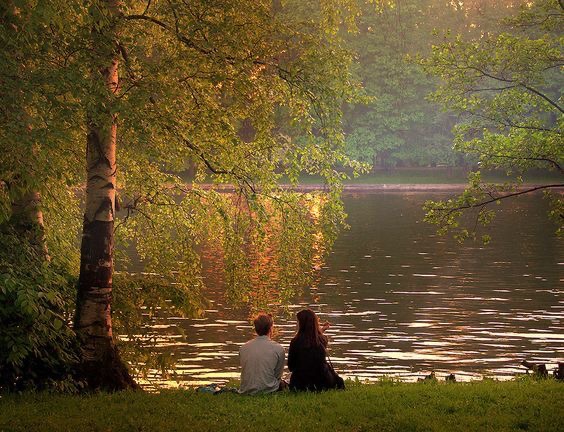
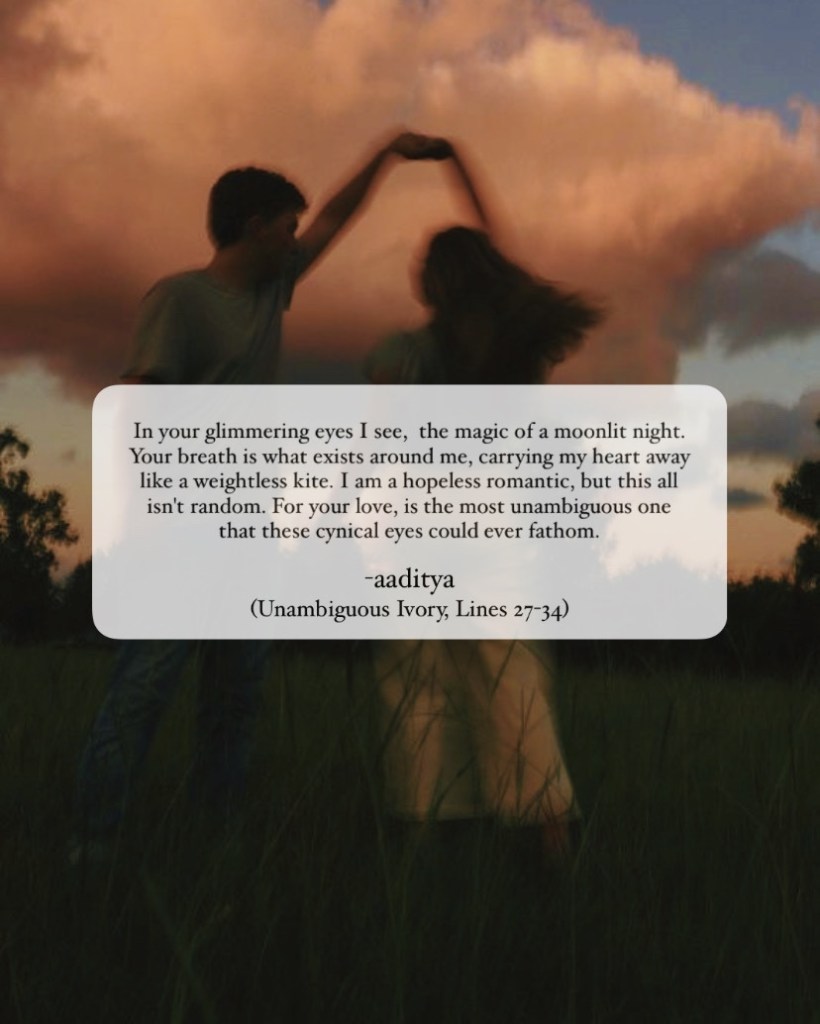
In your glimmering eyes I see, the magic of a moonlit night. Your breath is what exists around me, carrying my heart away like a weightless kite. I am a hopeless romantic, but this all isn’t random. For Your love, is the most unambiguous one that these cynical eyes could ever fathom.



 Aaditya Bajpai