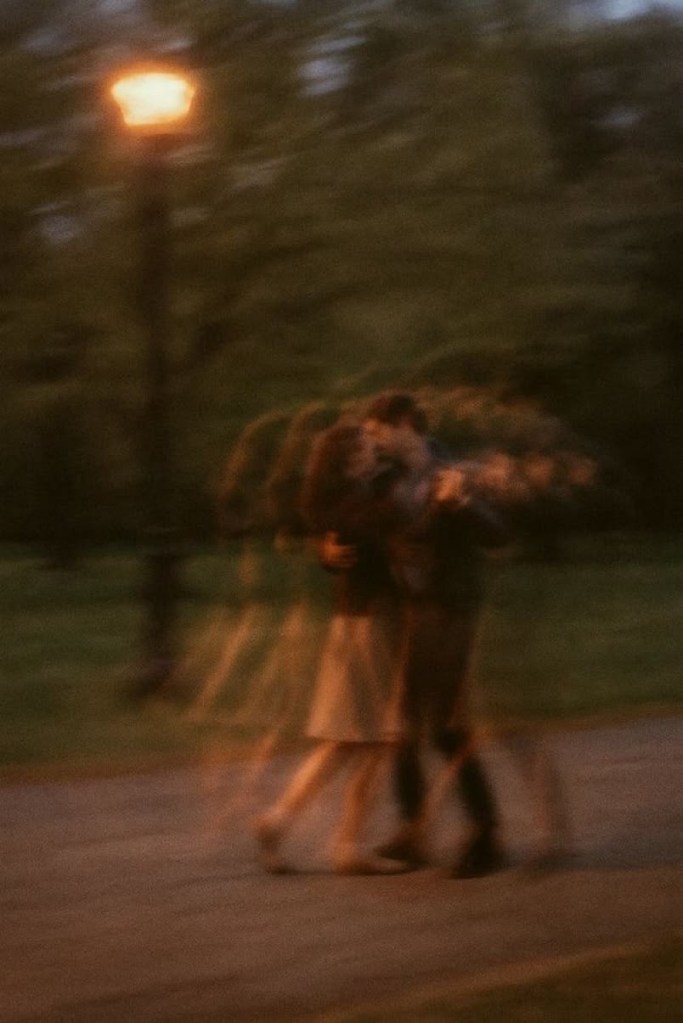
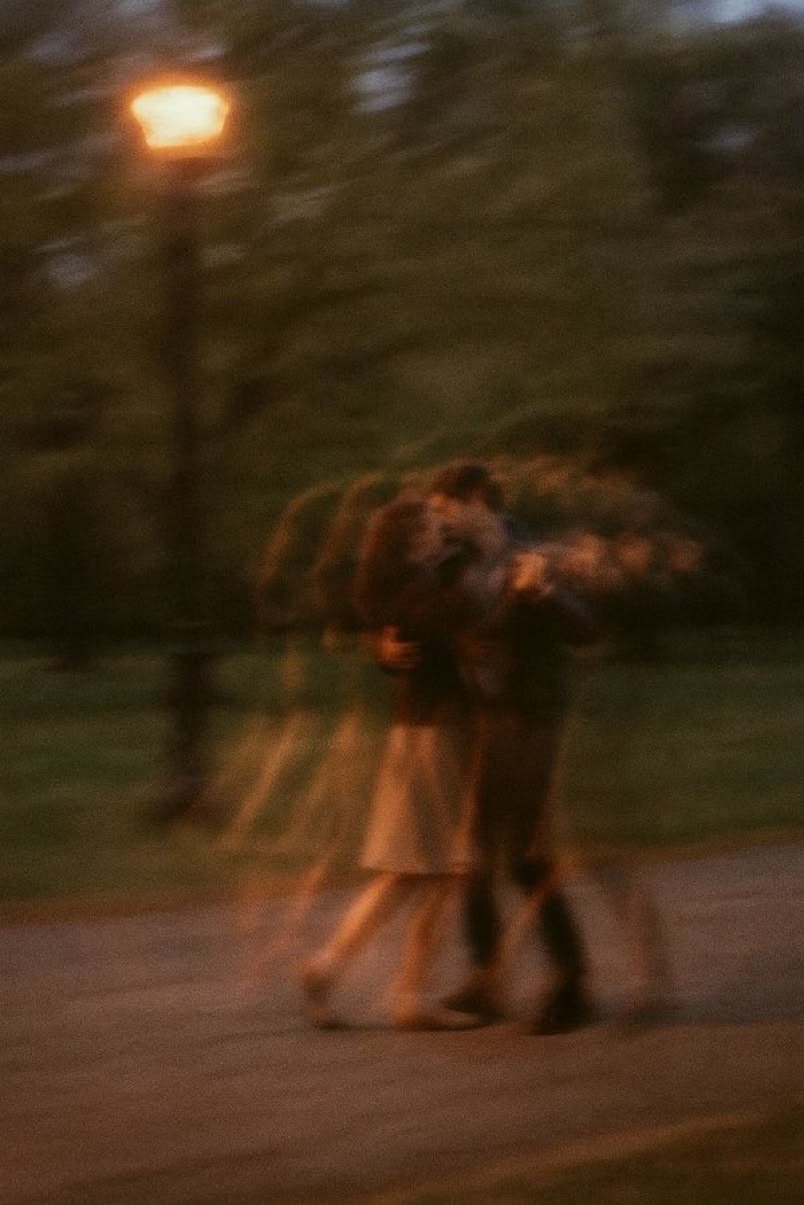
I think October is very similar to February. Not in temperature, not really, one still holds onto the last warm afternoons while the other gives up entirely and lets the cold have its way. But in missing you, they are the same. In October I miss you the way you miss summer, a little in denial, pretending the season hasn’t really turned. In February I miss you the way you miss anything that’s been gone too long, plainly, without pretending at all.
I think about winter a lot when I think about you. How it asks you to slow down. How it makes you want someone to share a blanket with, not because you’re cold exactly, but because the cold makes you aware of all the places you’re empty. You used to fill those places without even trying. Now the cold comes and I notice every one of them.
I miss the small things most. I miss wanting to eat an orange with you, pulling it apart slow on a Sunday, handing you the pieces I already know you’ll steal anyway. I miss the way you always dug the biscoff out of the cake first, saving it for last, which never made sense to me, saving the best part only to eat it alone at the end. I used to tease you about that. Now I’d give anything to watch you do it one more time.
Love, I think, isn’t loud in October or February. It’s quiet in both. It’s a hand you keep reaching for out of habit before remembering. It’s a coat that still smells like someone even after they’ve stopped wearing it around you. Winter doesn’t rush grief, and neither does missing you. It just sits there, patient, snowing a little more each day you don’t come home.
People think February is the coldest because of the number on the thermometer. I think it’s the coldest because it’s furthest from summer, furthest from the version of us that existed in warm light and open windows. October is the beginning of that distance. February is the middle of it. And I am stuck somewhere between the two, missing you the way you miss a season you can still half remember the smell of.
If you came back in October, I’d want to eat an orange with you on the porch and pretend the cold wasn’t coming. If you came back in February, I’d want to make you a cake just so I could watch you dig out all the biscoff first, laughing at you the way I used to, loving you the way I never stopped.
I think October is very similar to February. I miss you dearly in both. I think I will keep missing you in every season that isn’t the one you were still here for.
the politics of deservingness and the moral regulation of poetry
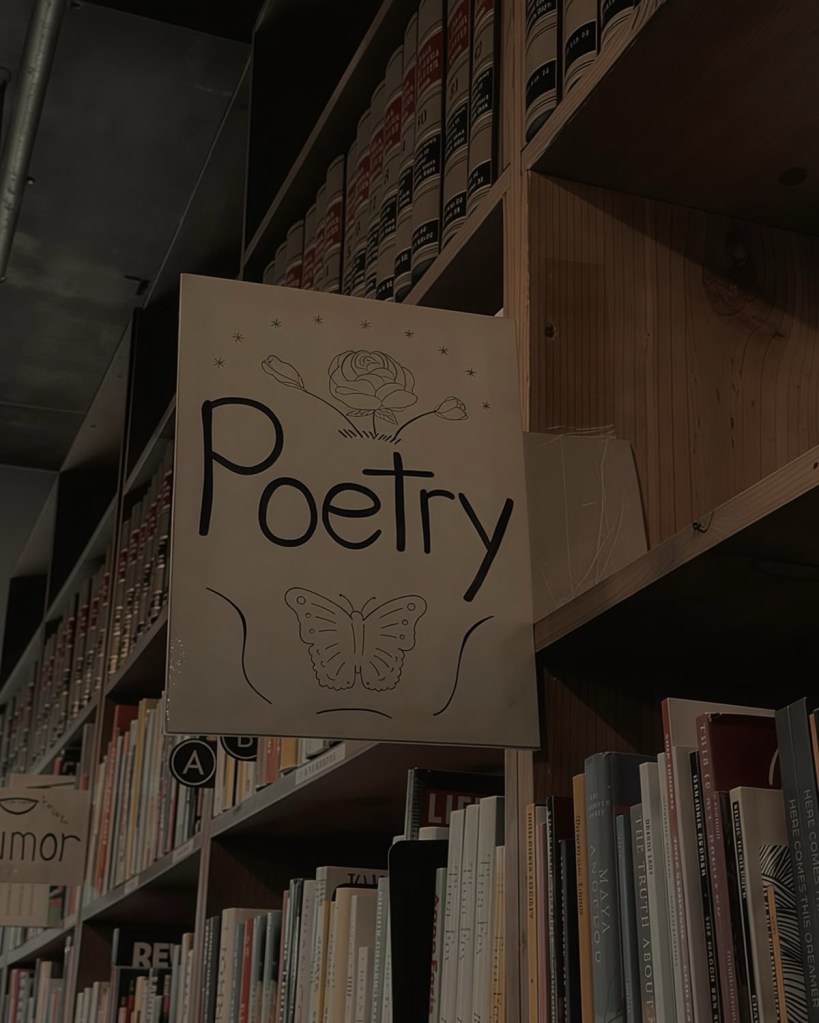
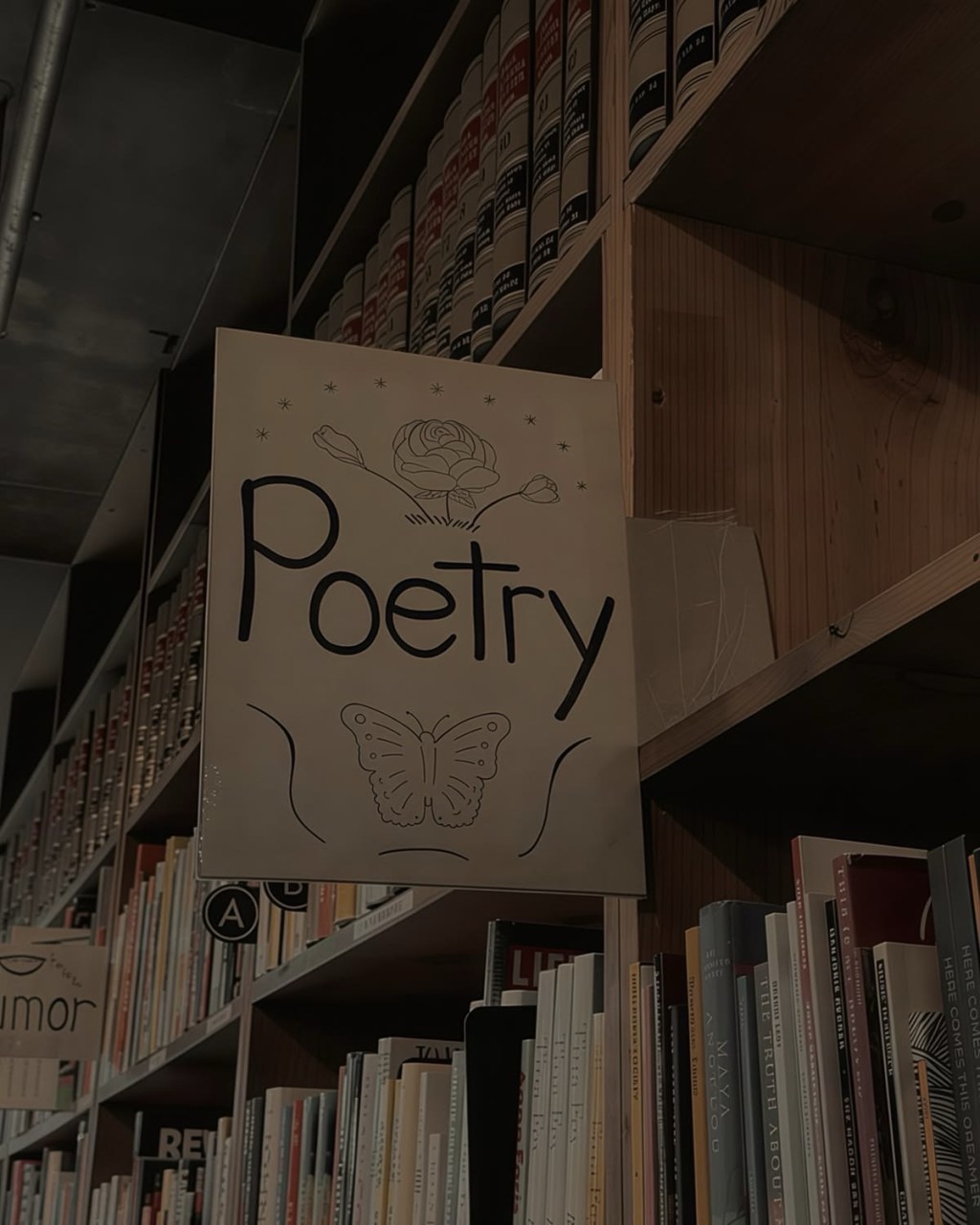
There is an unspoken entry fee at the door of contemporary poetry, and it is paid in suffering. Open a literary magazine, scroll a poetry Instagram account, sit through a university workshop, and you will notice the pattern quickly: the poems that get anthologized, awarded, and shared are disproportionately poems of wounding. Poems about a father’s violence. Poems about a body’s illness. Poems about war, displacement, grief, addiction, abuse. Joy, when it appears, tends to arrive heavily qualified, undercut by irony, or framed as something stolen briefly from an otherwise grim ledger.
I want to ask a blunt question: why does a poem so often need to prove it has suffered before we grant it our attention?
The credentialing of pain
Think about how we talk about “important” poems. We use words like raw, unflinching, urgent, necessary. These words do double duty. They describe craft, yes, but they also function as credentials, evidence that the poet has earned the right to speak by having survived something. A poem about heartbreak that stays in the register of longing is “slight.” A poem about heartbreak that includes a psychiatric ward is “essential.”
Consider how differently we receive these two stances toward loss. First, restraint:
I do not love you as if you were a rose of salt, topaz, or arrow of carnations that propagate fire
That is Neruda, and it survives in translation as tenderness without wreckage. Compare the register we now expect from “serious” grief poetry, closer to Sharon Olds:
I see him standing at the formica counter, with a bag of Wonder Bread, making his lunch, pulling the bread out of the wrapper
Olds is a great poet, and this quiet domestic image is doing real work, building toward devastation. But notice what our culture has trained us to expect: the domestic detail must eventually detonate. A poem that lingers in the Wonder Bread without ever cutting to the wound would, in most workshops, be told it “doesn’t earn its ending.”
Deservingness as a moral category, not an aesthetic one
This is where I think the real issue lives. We have imported into poetry a logic that properly belongs to welfare policy and courtroom sentencing: the logic of deservingness. In social policy, deservingness theory explains why some people in need receive sympathy and resources while others do not. Scholars like Joe Soss and others have shown that a “deserving” recipient of aid is coded as blameless, suffering through no fault of their own, and ideally visibly suffering, so that their need is legible at a glance.
Poetry has absorbed the same architecture. A poem “deserves” its space in the anthology if the suffering behind it is visible, legible, and attributable to something the poet did not choose: a diagnosis, a genocide, a parent’s failure. A poem about mild boredom, mild contentment, or a Tuesday that was simply fine, has no claim on our moral attention because it has not demonstrated need.
You can see the demand for legible wounding even in poems that resist it, like Lucille Clifton’s:
won’t you celebrate with me what i have shaped into a kind of life? i had no model.
Even here, celebration is only granted permission because it is framed against a background of having had no model, of having come through. Joy is legitimated retroactively, as survival’s dividend, not as a thing that might simply exist on its own terms.
The whiteness, and not-whiteness, of who gets to be light
There is also a racialized and gendered dimension to this that deserves naming directly. Poets from marginalized communities are frequently expected, by editors, by prize committees, by the market itself, to write the wound. A Black poet writing about police violence will find doors open in a way that a Black poet writing a quiet pastoral about tending tomatoes will not. This is its own form of moral regulation: it tells poets from certain backgrounds that their literary value is contingent on performing legible, extractable trauma for an audience that consumes it as testimony.
Ross Gay has written directly against this expectation, insisting on delight as a discipline:
and though this book is called catalog of unabashed gratitude it is really a mash note to delight
Gay’s whole project in The Book of Delights is a quiet insurgency against the idea that seriousness requires suffering. He has spoken about how often people ask him, gently but persistently, when he’ll write the “harder” book, as though delight were the warm-up act before the real poem.
What we lose
When we make suffering a precondition for poetic legitimacy, we lose several things at once.
We lose the poems that could honor ordinary contentment, the ones that might have said something true about a life that was, on balance, fine, which is to say most lives, most of the time. We lose the poets who do not want to convert their private pain into public currency, and who therefore stop writing, or write in silence, because the market has told them plainness is not enough.
We also, perversely, cheapen suffering itself. When trauma becomes a genre convention, a checkbox that signals literary seriousness, it stops functioning as testimony and starts functioning as aesthetic wallpaper. Consider Wisława Szymborska’s cooler, more skeptical eye on this exact temptation:
Whatever I say can be contradicted at any moment by evidence I haven’t seen.
Szymborska’s poetry is often about resisting the neat moral packaging of experience, including the packaging of suffering into something legible and prize worthy. Her irony is a rebuke to the idea that a poem must announce its wound to be taken seriously.
Toward a different economy of attention
I am not arguing that poems about pain are illegitimate or that we should stop reading them. Some of the poems I love most in the world are unflinching accounts of harm, and that unflinching quality is precisely their gift. What I am questioning is the structural requirement, the sense that a poem must present a receipt of suffering before it is allowed to matter, before an editor will publish it, before a reader will sit still for it.
What would it look like to read a poem about an ordinary afternoon with the same attention we give a poem about a hospital room? What would it mean to let a poem about simple, uncomplicated love stand next to a poem about abandonment, and to resist the reflex that tells us only one of them is doing real work?
Maybe it would look like reading Mary Oliver’s small, stubborn insistence:
Tell me, what is it you plan to do with your one wild and precious life?
A question that asks nothing of us except attention, offers no wound as collateral, and still, somehow, has never stopped mattering.
the white rose at the florist’s shop reminded me of Her,
not the rose’s whiteness exactly, but the way it held itself upright in the water, unhurried, as if it had all the time in the world to open. That was Her too. The patience in her hands when she braided her hair, the quiet certainty in how she said my name, like she’d practiced it long before we ever met.
I stood at the glass separating me from the flowers and thought: this is what it means to be reminded of someone by something small. Not a photograph, not a song on the radio, but a rose, ordinary, sold by the dozen, that somehow carried her whole weather inside it.
I bought one. I don’t know why, except that loving her has taught me to collect evidence of tenderness wherever I find it, to press proof of her into my pockets like a boy saving ticket stubs. Maybe I believed that if I carried the white rose home, I would be carrying a small, portable version of her, enough softness to get me through until I saw her again.
On the walk back, the petals kept their color against the grey evening, stubborn and bright, the way she is stubborn and bright, the way she has always insisted on blooming even in seasons that gave her every reason not to.
I am in love in the unglamorous, everyday way. In the way a flower shop window can undo me, in the way an ordinary Tuesday becomes unbearably tender the moment I remember there is a person in this world who makes white roses look like her handwriting.
Tonight I’ll give her the rose. I’ll tell her the small, embarrassing truth, that beauty, wherever I meet it now, has her name folded somewhere inside it.
One of the first things we are taught when studying literature is to ask, “What did the author mean?” It seems like the most natural question in the world. If someone wrote a book, surely they know exactly what it is about. But what if that assumption is wrong?
In 1967, the French literary critic Roland Barthes published an essay titled The Death of the Author. It remains one of the most influential works in literary theory because it challenged one simple idea: the author’s intention should not be the final authority in interpreting a text.
Barthes argued that the moment a work is published, it no longer belongs solely to the person who wrote it. Instead, it begins a new life with its readers. Every reader approaches a text with different experiences, beliefs, emotions, and cultural backgrounds. As a result, every reading of the same work is slightly different.
Think about Shakespeare’s Hamlet. For some readers, it is a revenge tragedy. For others, it is a study of grief. Some see it as a political play about corruption. Others read it as a philosophical work about mortality or a psychological exploration of indecision. None of these interpretations cancel each other out. They all exist because the text allows them to exist.
Now imagine something almost impossible. Imagine William Shakespeare returning today and telling us that Hamlet was never meant to be about indecision or existential anxiety. Imagine he insisted that modern readers had misunderstood his play for four centuries.
Would that settle the debate?
Barthes would say no.
His argument is not that authors are unimportant. It is that once a work enters the world, its meaning is no longer controlled by its creator. The text becomes independent. It belongs to every person who reads it.
This idea completely changes the way we think about literature. Instead of treating books as puzzles with one correct answer, we begin to see them as conversations. A novel written hundreds of years ago can still speak to someone today because each generation brings new questions to the same words.
This also explains why classics survive. The words on the page remain the same, but readers do not. A teenager, a parent, and a retired professor can all read the same novel and leave with entirely different interpretations. The book has not changed. The reader has.
Of course, not everyone agrees with Barthes. Many critics believe that understanding an author’s life, historical context, and intentions helps us better understand their work. Knowing about Charles Dickens’ England or Virginia Woolf’s experiences can certainly deepen our appreciation of their writing.
But Barthes invites us to ask a different question. What if literature becomes richer when we stop searching for the author’s answer and start paying closer attention to the text itself? What if meaning is not something hidden inside a book, waiting to be uncovered, but something that comes into existence every time someone reads it?
That is why The Death of the Author continues to shape literature classrooms around the world. It forces us to reconsider one of our oldest assumptions about reading. Perhaps the meaning of a book is not owned by the person who wrote it. Perhaps it belongs to the millions of people who continue to read it.
So let me leave you with one final question.
If Shakespeare himself appeared today and completely disagreed with your interpretation of Hamlet, would you change your mind?
Or has Hamlet belonged to its readers for so long that not even Shakespeare gets the final word?