• The Lamppost

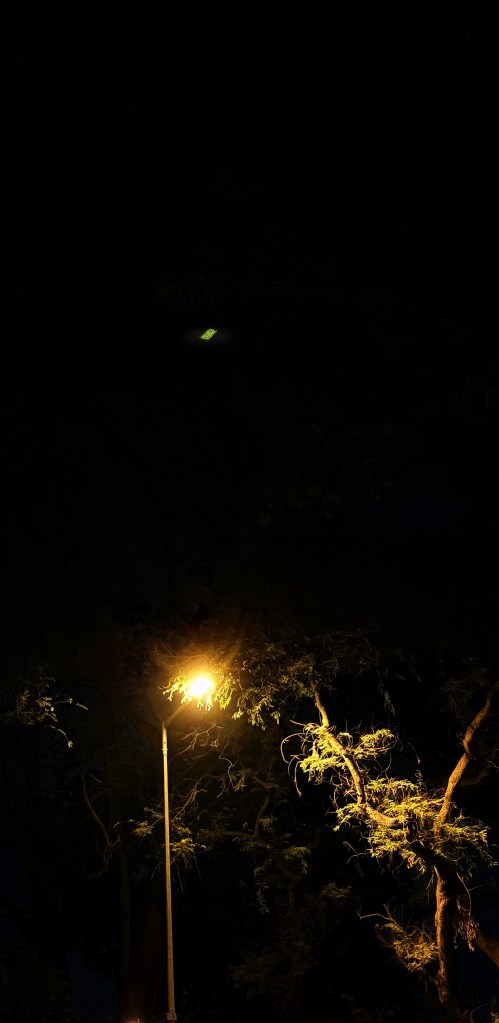
    There is a lamppost on the corner of a road no one remembers being built.

    It stands with a spine bent slightly backward as if surprised to still be standing. The light it casts isn’t gold, not quite. It’s that color just before a dream ends but before you know you’re waking up. It doesn’t flicker but you imagine it would if you blinked at the wrong time. And it does blink, with the wind maybe or with the memory of someone once leaning on it, half drunk with hope or half sure it wouldn’t last.

    The evening folds in around it, the kind that doesn’t quite settle. That blue which still believes in the sun though the sun has long walked off. And in that bruise-colored hush, the lamppost is alone but not lonely. There’s a difference.

    Sometimes, you find yourself staring at it as if it might explain something. The way it holds light as though it’s been entrusted with warmth it didn’t ask for. As though someone once whispered to it, hold this, just for a little while, and forgot to return. You think maybe that’s what love is, the holding of something bright without knowing if anyone will come back for it.

    You walk past and it doesn’t call, not in words, but in a hum low enough to miss if you’re too sure of yourself. It hums like old lullabies in languages that didn’t survive. Grief maybe. Or memory. Which are not always different things.

    It never moves. Never grows. But still, somehow, it changes. And in that change, you see yourself, heart first and blurred. Because love leaves footprints. And grief walks in them barefoot.

    You don’t know why it matters. But the lamppost knows. And it keeps burning. Because to stop would mean admitting that some things don’t return. And maybe it still believes.

    Maybe so do you.

    -aaditya

  • Spilled Water and Chopsticks

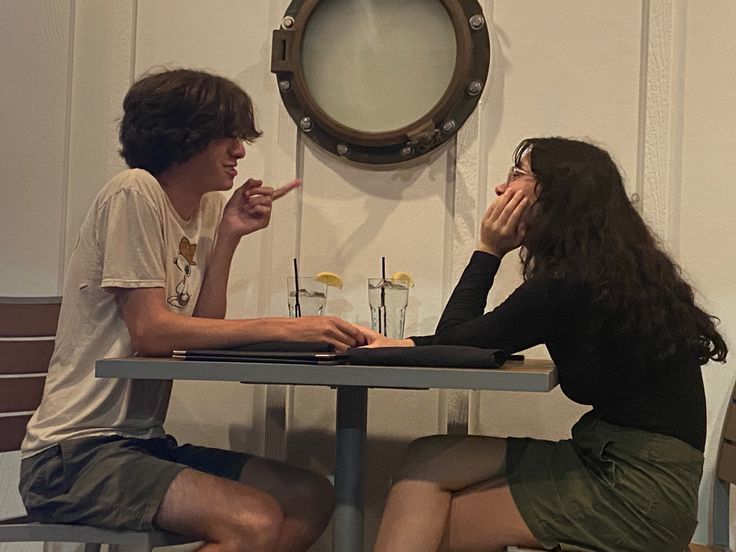
    The glow of neon catches your skin—
    pink and purple painting shadows on the curve of your cheek.
    We are haloed in “good vibes only,”
    but the way you look at me is the only gospel I believe.

    You wrestle with chopsticks,
    a clumsy dance of wood and slick noodles.
    Every spicy mouthful steals a blink,
    your lashes flutter twice like a nervous spell—
    and I am enchanted.

    My food cools, untouched.
    Yours vanishes, each bite disappearing
    into the story of your hunger.
    When I offer you more,
    you laugh,
    slide your plate too far,
    topple the glass of water between us.

    “Why didn’t I drink this?” you mutter,
    grabbing napkins like they’re answers.
    I want to ask if you are always this messy
    with things you care for.
    But I only watch
    as you swipe at the spill,
    as though it’s urgent.

    When it’s cleaned,
    I pull my plate between us,
    a quiet offering,
    a bridge.
    You lean forward,
    foreheads grazing—
    a fragile hello.

    “Don’t move,” you whisper,
    your breath pooling in the air between us.
    “Stay like this. Close.
    Like elephants. Did you know they do this?
    Heads together, a greeting.”

    I don’t tell you
    I already knew.
    I don’t tell you
    I want every moment with you
    to feel like this—
    strange, and full,
    and alive.

    aaditya.

  • December

    December stands still, yet moves within itself,
    a solemn breath before the year exhales.
    The air whispers secrets of frost and fire,
    a quiet warmth nestled in the heart of cold.

    Beneath bare trees, life lingers,
    fragile as the glass ornaments we cradle,
    shining and trembling,
    aware of their fragility.

    It is the month of hands—
    hands to hold close,
    hands to wave goodbye.
    Snow falls like memory,
    each flake a piece of what was,
    melting as it lands.

    The sky wears both dawn and dusk together,
    an endless twilight
    where time folds in on itself.
    The past feels closer,
    the future a breath you cannot catch.

    Love in December is fierce,
    burning against the chill,
    because it knows it must.
    Because it knows
    it will soon have to let go.

    And so, we wrap the year in ribbons,
    in the ache of holding on,
    in the grace of release.
    December, you are the stillness of endings,
    the weight of beginnings,
    a lesson in everything
    we can never quite keep.

    aaditya

  • Asylum

    Whenever I look at a sunflower

    it’d remind me of you. 

    Sunflowers are metaphors for 

    the people around whom you feel alive. 

    I have an open field inside of me

    wherein the wind echoes your laugh.

    The open field has always been filled

    with roses, that your presence has watered.

    If this is what the poets call love, then I’ve

    laced far too many notebooks with the idea of you.

    How everything eventually is about you?

    How sometimes i go sleepless at nights, but then

    How I yearn to sleep a little bit more

    because you came into my dreams.

    How I grieve when I am not close to you?

    But then what is grief, if not love persevering.

    What is grief, if not love with no place to go,

    that corners in your eyes, and 

    in the hollow part of your chest?

    What is love, if not the poem 

    scracthed on the walls of my throat.

    How I’d want to linger near the door

    uncomfortably, rather than leaving.

    How I’d want you to forget your scarf

    and come back later, to find it. 

    What is love, if not everything that I feel for you?

    For it was when you allowed me to enter

    your world, when I was scared of mine. 

    Toh aakhir Kaha chala hai man ka rasta? 

    Tumhare paas. 

    -aaditya.

  • The Art of Letting Go

    Loving someone dearly is what we do the best.

    Probably better than breathing, we love.

    We cling close to it, aware that

    we in no way can control it.

    Everything seems to be wonderful, 

    Filled with colours, rainbows and lights.

    We want to stay close, and keep them close.

    We want to hold them, and take them home.

    Touching of toes, meeting of lips,

    Making love with your every bit.

    Beginning the days with their name

    And wanting to end the same with their breath.

    Adamant and ignorant of the fact that,

    All of it is just holding roses,

    until the thorns press against your fingers.

    Letting go is an art of necessity.

    We do not want it, but we have to master it.

    It wasn’t until I saw in her eyes, that

    irrespective of what I feel, it will never be the same for her.

    Even Stephen King once said, that sometimes in life

    You have to just let the bird go, for

    You know it’s not meant to be caged.

    When those thorns press so hard,

    That you realise that its time to let go,

    For it just means that we are all humans

    Incapable of holding on to everything,

    specially when it hurts the most.

    The only barrier to letting go is hope,

    We hope that maybe something somehow will work out,

    But it never does. It’s always the thorns over the roses.

    So, in the end, the whole of loving someone, 

    Becomes an act of letting go.

    So, take you moment, and take you time,

    And bid that farewell with all your heart.

    -aaditya

  • DECEMBER

    It’s the 17th of December, 6:05 pm,

    exactly two months since I last wrote to you.

    Have you ever yearned for something

    that wasn’t even yours to begin with?

    Because I know I have been lost, since so 

    long, in something, in you?

    The leaves of autumn have fallen dead, and

    here I am wanting to have an orange with you.

    This winter, it tells me, to finally stand up to you

    and tell you that I am so much in love with you.

    Its like even the ghost in my closet,

    is screaming to let it all out. 

    But it’s you we are talking about, 

    in front whom I am nothing but an idle candle,

    burning in its own flame, and 

    standing still nevertheless.

    My heart skips a beat and my world stops

    as my gaze takes in the sight of her stunning form,

    clad in her kurti and a dupatta.

    My eyes flicker my heart flutters,

    as I gaze upon the goddess of perfection.

    But it’s December, the month of letting go.

    December holds so much,

    the end of best times, and

    closure for all that was lost.

    A month so hopeful, yet

    carries heaviness in its frost.

    Maybe this time, I’ll say it all too.

    On Christmas’ eve, I’ll meet you at the golden hour,

    standing hopefully, you’ll be in my sight, 

    and, I’ll give you the yellow flower.

    Then? i’ll leave it to december

    to teach me that new beginnings,

    don’t really require new calendars. 

    Because I know, it’s always you.

    I’ll spend my eternity, in 

    perfecting the subtle art of loving you. 

    Today, tomorrow and the day after,

    every bit of my love, will be about you.

    -aadi.

  • i waited, you didn’t come

    The leaves have started turning to

    shades of yellow, orange and red.

    October has finally arrived.

    They say that the turning of colours

    Is to protect the leaves from cold temperatures.

    It’s October 6 today, and I am writing this to you.

    The evening today is nice and warm,

    Though it’s about to turn cold.

    I came nearby the lake we used to visit,

    Walked a bit, and even left a note 

    for you to read, between the pages of your notebook.

    The note said, “meet me by the lakeside, we will sit and talk”.

    The lake was still today, and had turned

    Orange, as if the sun was drowning in it.

    The sky was still alive, while I waited for you.

    I asked myself today,

    Did you ever want to go far away ? Where would you go?

    But I couldn’t find an answer, so I waited for you to give me one.

    “Aaj walk Karne chalen? Shaam ko, beside the lake?”, the note said.

    It was getting dark, as 2 hours had passed.

    I still wanted the answer, and I wanted you there.

    I kept walking and talking to the sun.

    It didn’t last long, as the sun finally rested in the lake.

    It was getting dark, and I kept waiting. 

    Maybe the note was misplaced,

    The wind was strong today.

    And a lot many reasons I gave myself

    to hold myself from crying.

    “I will wait some other day”, I said to myself.

    What happened today?

    I waited, you didn’t come.

    -aadi.

  • Perspective

    The romanticism of orange flowers can be characterized by the confluence of a multiplicity of evocative features. This chromatic and olfactory combination is imbued with a subtlety and richness that is unparalleled in its ability to evoke a sense of longing and desire.

    The hue of orange is inherently linked to warmth, vitality, and dynamism. It is a hue that is undeniably uplifting, evocative of the sun and the fertile earth. The allure of orange flowers is further enhanced by their delicate, intricate structures. The petals are intricately arranged in a symmetrical and harmonious fashion, creating an organic geometry that is both mesmerizing and seductive. When viewed from a distance, the flowers appear as a vibrant orange blur, an ethereal presence that seems to glow with an inner radiance.

    However, if one looks at this picture closely then the beauty of the orange flowers might be overlooked by the human race for their eyes shall be focussed on the barren lands behind. The juxtaposition of the orange flowers amidst the dry, barren lands creates a striking visual dichotomy. The vibrant hue of the blossoms seems almost surreal against the dull and lifeless landscape. It is as if nature itself is making a bold statement, asserting its resilience and determination to survive. The flowers’ delicate petals sway in the unrelenting heat, a reminder of the fragility of life, yet also of its tenacity. It is a scene of contrasts, of beauty amidst decay, of hope amidst despair. The orange flowers serve as a beacon of light in the darkness, a small but powerful symbol of nature’s ability to endure and flourish against all odds.

    In the presence of the orange flowers amidst the barren land, human tendencies are often marked by a desire to assign purpose to their existence. Questions arise, such as “what is the point of these flowers in such a desolate landscape?” This inclination towards rationalization can obscure the inherent beauty of the scene and reduce it to mere functionality. It is as if we seek to impose our own sense of order onto the natural world, to explain away the inexplicable. Yet the orange flowers defy such narrow-minded thinking, existing simply because they can, a testament to the whims of nature and the beauty that arises from its unfettered expression. In a world increasingly defined by human intervention and control, the orange flowers serve as a reminder of the intrinsic value of the natural world and the importance of embracing the beauty that arises from its inherent chaos.

    The orange flowers’ mere presence in a barren landscape subverts the human impulse to impose order and rationality, instead offering a glimpse into the unpredictable, yet exquisite, manifestations of the natural world. It is a display of nature’s raw, unbridled power, a force that has no need for human rationalization or purpose. Rather, it is an entity that is self-sufficient, infinitely complex, and wholly deserving of appreciation in its own right.

    “Amidst the barren lands, some orange in flowers blooms,

    personifying a flicker of hope in the desolate gloom.

    The vibrant hue, acting as a beacon of life

    in the midst of an arid terrain, existing as a

    testament to nature’s resilience, despite the parched pain.

    Each petal, a brushstroke of colour on a canvas of dust and sand,

    a masterpiece of contrast, the perfect blend of desolation and grand.

    For even in the bleakest of landscapes, life finds a way,

    to bloom and thrive, to shine and stay.”

    aaditya

    Perspective
  • Romanticising Oranges through “An Orange” by Wendy Cope

    If, as they say, poetry is a sign of something
    among people, then let this be pre-arranged now,
    between us, while we are still peoples: that
    at the end of time, which is also the end of poetry
    (and wheat and evil and insects and love),
    when the entire human race gathers in the flesh,
    reconstituted down to the infant’s tiniest fold
    and littlest nail, I will be standing at the edge
    of that fathomless crowd with an orange for you,
    reconstituted down to its innermost seed protected
    by white thread, in case you are thirsty, which
    does not at this time seem like such a wild guess,
    and though there will be no poetry between us then,
    at the end of time, the geese all gone with the seas,
    I hope you will take it, and remember on earth
    I did not know how to touch it, it was all so raw,
    and if by chance there is no edge to the crowd
    or anything else so that I am of it,
    I will take the orange and toss it as high as I can.

    Analysis

    If, as they say, poetry is a sign of something among people, then let this be prearranged now, between us, while we are still peoples:”

    The speaker begins by questioning the significance of poetry and its ability to connect people. The phrase “let this be pre-arranged now” suggests a desire to make a meaningful connection with the reader, even if it is at the end of time.

    that at the end of time, which is also the end of poetry (and wheat and evil and insects and love), when the entire human race gathers in the flesh, reconstituted down to the infant’s tiniest fold and littlest nail,”

    The speaker continues to imagine a future time when everything will come to an end, including poetry, love, and life as we know it. The phrase “reconstituted down to the infant’s tiniest fold and littlest nail” suggests that even in this future time, the speaker and the reader will be reconnected at the most fundamental level of human existence.

    I will be standing at the edge of that fathomless crowd with an orange for you, reconstituted down to its innermost seed protected by white thread,”

    Here, the speaker offers the reader an orange, which represents a gesture of love and connection. The phrase “reconstituted down to its innermost seed protected by white thread” reinforces the idea that even in the future, the speaker and the reader will be connected at the most fundamental level of existence.

    in case you are thirsty, which does not at this time seem like such a wild guess,”

    The speaker suggests that the reader may be thirsty at the end of time, and that the orange will be a refreshing drink. This line also highlights the uncertainty and unpredictability of the future.

    and though there will be no poetry between us then, at the end of time,”

    The speaker acknowledges that poetry will no longer exist in the future, but the orange will be a meaningful gesture of love and connection regardless.

    the geese all gone with the seas,”

    This line suggests a future world in which natural beauty and wonder will no longer exist.

    I hope you will take it, and remember on earth I did not know how to touch it, it was all so raw,”

    The speaker hopes that the reader will accept the orange as a symbol of love and connection, even though the speaker did not fully understand its significance during their lifetime.

    and if by chance there is no edge to the crowd or anything else so that I am of it,”

    The final lines of the poem suggest a sense of uncertainty about the future and the possibility that the speaker may not be present at the meeting with the reader.

    I will take the orange and toss it as high as I can.

    Despite this uncertainty, the speaker vows to make the gesture of offering the orange, even if it is only to the universe itself. This final line is a powerful image of hope and connection that transcends time and space.

    “peeling oranges this, sharing tangerines that, what about cutting and de-seeding pomegranates for the ones you love? the ruby stains on your fingers fleeting proofs of your undying devotion”

    -aaditya

Design a site like this with WordPress.com
Get started