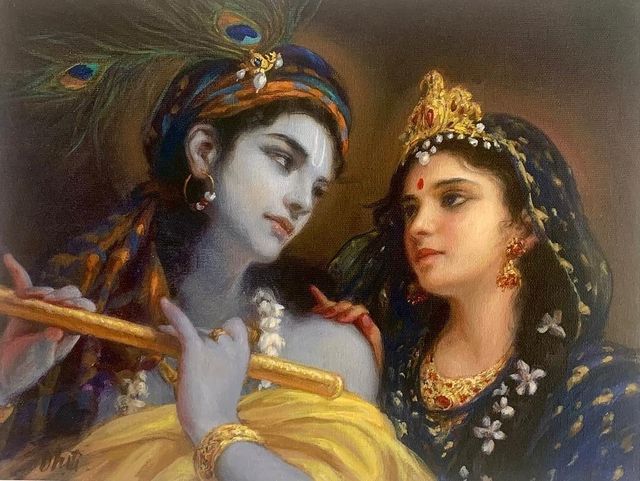
• Radha’s Plight

    “O woman with desire, place on this patch of flower-strewn floor your lotus foot, And let your foot through beauty win, To me who am the Lord of All, O be attached, now always yours”

    Krishna to Radha

    When Krishna left for Mathura, the mind of Srimati Radharani was completely disrupted. She became almost mad because of the extreme separation from Krishna and experienced great mental pain and agitation, which caused Her to drown in various sorts of mental speculation in the river of anxiety.

    She (Radharani) thought, ‘Now I am going to die, and when I die, Kṛṣṇa will surely come back to see Me again. But when He hears of My death from the people of Vṛndāvana, He will certainly be very unhappy. Therefore I shall not die.’

    -Caitanya Caritamrta, Antya lila 1.53- Srila Prabhupada’s Purport

    Describing the love in madness (Unmāda) of Srimati Radharani, Uddhava, after returning to Mathura from Vrindavana, spoke to Krishna as follows

    bhramati bhavana-garbhe nirnimittaṁ hasantī prathayati tava vārtāṁ cetanācetaneṣu

    luṭhati ca bhuvi rādhā kampitāṅgī murāre viṣama-viraha-khedodgāri-vibhrānta-cittā

    Uddhava said to Lord Kṛṣṇa, “My dear Kṛṣṇa, all the gopīs are so afflicted by Your absence that they have become almost mad. O Murāri, at home Śrīmatī Rādhārāṇī laughs unnecessarily and, like a madwoman, inquires about You from every entity without distinction, even from the stones. She rolls on the ground, unable to bear the agony of Your absence.” – Sri Ujjvala Nilamani 15.175

    Radharani would madly talk (Pralāpa) as follows

    kva nanda-kula-candramāḥ kva śikhi-candra-kālaṅkṛtiḥ kva mandra-muralī-ravaḥ kva nu surendra-nīla-dyutiḥ
    kva rāsa-rasa-tāṇḍavī kva sakhi jīva-rakṣauṣadhir nidhir mama suhṛttamaḥ kva tava hanta hā dhig vidhiḥ

    My dear friend, where is Kṛṣṇa, who is like the moon rising from the ocean of Mahārāja Nanda’s dynasty? Where is Kṛṣṇa, His head decorated with a peacock feather? Where is He? Where is Kṛṣṇa, whose flute produces such a deep sound? Oh, where is Kṛṣṇa, whose bodily luster is like the luster of the blue indranīla jewel? Where is Kṛṣṇa, who is so expert in rāsa dancing? Oh, where is He, who can save My life? Kindly tell Me where to find Kṛṣṇa, the treasure of My life and best of My friends. Feeling separation from Him, I hereby condemn Providence, the shaper of My destiny.-Lalita-Madhava 3.25

    Radharani won’t eat anything. Even sleep would desert Her. Thus, She had become very thin (Tānava). Uddhava thus describes Her condition to Krishna as follows

    udañcad-vaktrāmbhoruha-vikṛtir antaḥ-kulaṣitā sadāhārābhāva-glapita-kuca-kokā yadu-pate
    viśuṣyantī rādhā tava viraha-tāpād anu-dinaṁ nidāghe kuly eva kraśima-paripākaṁ prathayati

    Consider the condition of the gopīs! Śrīmatī Rādhārāṇī especially is in a very painful condition because of separation from You. She has grown skinny, and Her bodily lustre is almost gone. Her heart is immersed in pain, and because She has given up eating, Her breasts have become black, as if diseased. Because of separation from You, all the gopīs, especially Rādhārāṇī, appear like dried-up water holes under the scorching heat of the sun. -Sri Ujjvala Nilamani 15.171

    Observing the death-like condition of Srimati Radharani, Lalita Sakhi, wrote a strong letter to Krishna and chastised Him for staying in Mathura. She thus wrote as follows

    aye rāsa-krīḍā-rasika mama sakhyaṁ nava-navā purā baddhā yena praṇaya-laharī hanta gahanā
    sa cen muktāpekṣas tvam asi dhig imāṁ tūla-śakalaṁ yad etasyā nāsā-nihitam idam adyāpi calati

    Simply by dancing in the circle of the rāsa dance, You attracted Śrīmatī Rādhārāṇī’s love. Why are You now so indifferent to my dear friend Rādhārāṇī? She is lying nearly unconscious, thinking of Your pastimes. I shall determine whether She is alive by putting a cotton swab under Her nostrils, and if She is still living, I shall chastise Her.-Hamsa-duta [96]

    Being greatly afflicted by the pain of separation from Krishna, Srimati Radharani, as if diseased, said to Lalita Sakhi as follows

    uttāpī puṭa-pākato ’pi garala-grāmād api kṣobhaṇo dambholer api duḥsahaḥ kaṭur alaṁ hṛn-magna-śūlyād api
    tīvraḥ prauḍha-visūcikāni cayato ’py uccair mamāyaṁ balī marmāṇy adya bhinatti gokula-pater viśleṣa-janmā jvaraḥ

    My dear Lalita, I cannot bear suffering the fever of separation from Kṛṣṇa, nor can I explain it to you. It is something like gold melting in an earthen pot. This fever produces more distress than poison, it is more piercing than Indra’s thunderbolt, more sharp than a spear plunged into the heart, and more horrifying than the last stage of cholera.- Lalita Madhava 3.24

    When Radharani was feeling separation from Krishna, She would constantly chant Hare Krishna Mahamantra. Chanting of Mahamantra was Her only resort.

    ekadā kṛṣṇa-virahād dhyāyantī priya-saṅgamam |

    mano-bāṣpa-nirāsārthaṁ jalpatīdaṁ muhur muhuḥ ||

    hare kṛṣṇa hare kṛṣṇa kṛṣṇa kṛṣṇa hare hare |

    hare rāma hare rāma rāma rāma hare hare ||

    Śrī Rādhā was feeling the pain of separation from Kṛṣṇa and was meditating on the reunion with Him. In order to rid Herself of the agony of separation She felt in His absence, She repeatedly began to chant the mahā-mantra: Hare Kṛṣṇa, Hare Kṛṣṇa, Kṛṣṇa Kṛṣṇa, Hare Hare/ Hare Rāma, Hare Rāma, Rāma Rāma, Hare Hare.

    -Quoted in Sri-Harinamartha-ratna-dipika, Srila Raghunatha Dasa Goswami

    When Srimati Radharani would faint, all the other gopis would chant the Hare Krishna Mahamantra in Her ears and would revive Her.

  • The Art of Letting Go

    Loving someone dearly is what we do the best.

    Probably better than breathing, we love.

    We cling close to it, aware that

    we in no way can control it.

    Everything seems to be wonderful, 

    Filled with colours, rainbows and lights.

    We want to stay close, and keep them close.

    We want to hold them, and take them home.

    Touching of toes, meeting of lips,

    Making love with your every bit.

    Beginning the days with their name

    And wanting to end the same with their breath.

    Adamant and ignorant of the fact that,

    All of it is just holding roses,

    until the thorns press against your fingers.

    Letting go is an art of necessity.

    We do not want it, but we have to master it.

    It wasn’t until I saw in her eyes, that

    irrespective of what I feel, it will never be the same for her.

    Even Stephen King once said, that sometimes in life

    You have to just let the bird go, for

    You know it’s not meant to be caged.

    When those thorns press so hard,

    That you realise that its time to let go,

    For it just means that we are all humans

    Incapable of holding on to everything,

    specially when it hurts the most.

    The only barrier to letting go is hope,

    We hope that maybe something somehow will work out,

    But it never does. It’s always the thorns over the roses.

    So, in the end, the whole of loving someone, 

    Becomes an act of letting go.

    So, take you moment, and take you time,

    And bid that farewell with all your heart.

    -aaditya

  • DECEMBER

    It’s the 17th of December, 6:05 pm,

    exactly two months since I last wrote to you.

    Have you ever yearned for something

    that wasn’t even yours to begin with?

    Because I know I have been lost, since so 

    long, in something, in you?

    The leaves of autumn have fallen dead, and

    here I am wanting to have an orange with you.

    This winter, it tells me, to finally stand up to you

    and tell you that I am so much in love with you.

    Its like even the ghost in my closet,

    is screaming to let it all out. 

    But it’s you we are talking about, 

    in front whom I am nothing but an idle candle,

    burning in its own flame, and 

    standing still nevertheless.

    My heart skips a beat and my world stops

    as my gaze takes in the sight of her stunning form,

    clad in her kurti and a dupatta.

    My eyes flicker my heart flutters,

    as I gaze upon the goddess of perfection.

    But it’s December, the month of letting go.

    December holds so much,

    the end of best times, and

    closure for all that was lost.

    A month so hopeful, yet

    carries heaviness in its frost.

    Maybe this time, I’ll say it all too.

    On Christmas’ eve, I’ll meet you at the golden hour,

    standing hopefully, you’ll be in my sight, 

    and, I’ll give you the yellow flower.

    Then? i’ll leave it to december

    to teach me that new beginnings,

    don’t really require new calendars. 

    Because I know, it’s always you.

    I’ll spend my eternity, in 

    perfecting the subtle art of loving you. 

    Today, tomorrow and the day after,

    every bit of my love, will be about you.

    -aadi.

  • i waited, you didn’t come

    The leaves have started turning to

    shades of yellow, orange and red.

    October has finally arrived.

    They say that the turning of colours

    Is to protect the leaves from cold temperatures.

    It’s October 6 today, and I am writing this to you.

    The evening today is nice and warm,

    Though it’s about to turn cold.

    I came nearby the lake we used to visit,

    Walked a bit, and even left a note 

    for you to read, between the pages of your notebook.

    The note said, “meet me by the lakeside, we will sit and talk”.

    The lake was still today, and had turned

    Orange, as if the sun was drowning in it.

    The sky was still alive, while I waited for you.

    I asked myself today,

    Did you ever want to go far away ? Where would you go?

    But I couldn’t find an answer, so I waited for you to give me one.

    “Aaj walk Karne chalen? Shaam ko, beside the lake?”, the note said.

    It was getting dark, as 2 hours had passed.

    I still wanted the answer, and I wanted you there.

    I kept walking and talking to the sun.

    It didn’t last long, as the sun finally rested in the lake.

    It was getting dark, and I kept waiting. 

    Maybe the note was misplaced,

    The wind was strong today.

    And a lot many reasons I gave myself

    to hold myself from crying.

    “I will wait some other day”, I said to myself.

    What happened today?

    I waited, you didn’t come.

    -aadi.

  • A Time Called You – Review

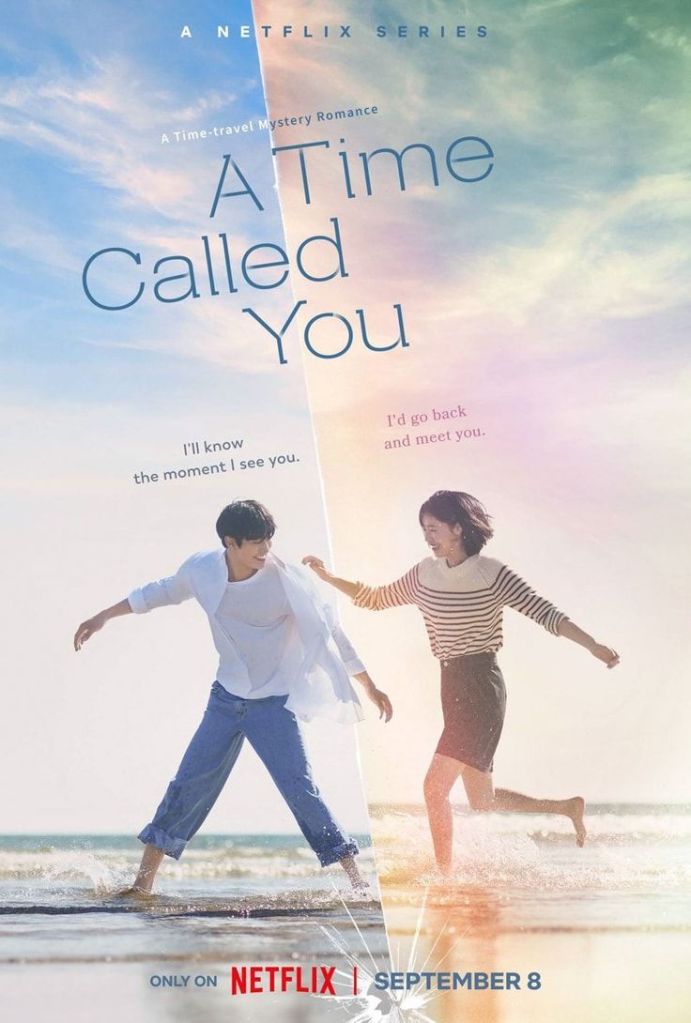
    “A Time Called You”

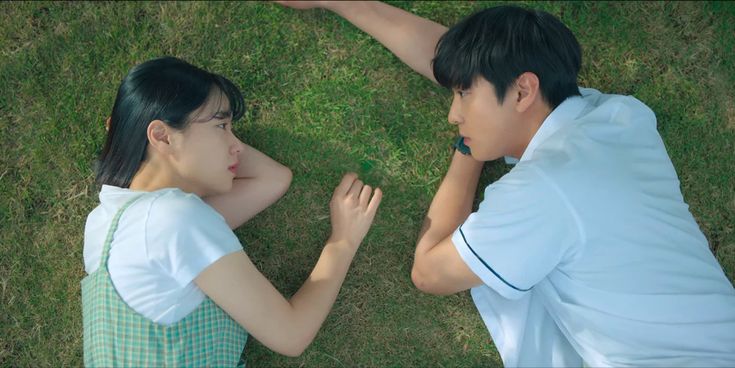
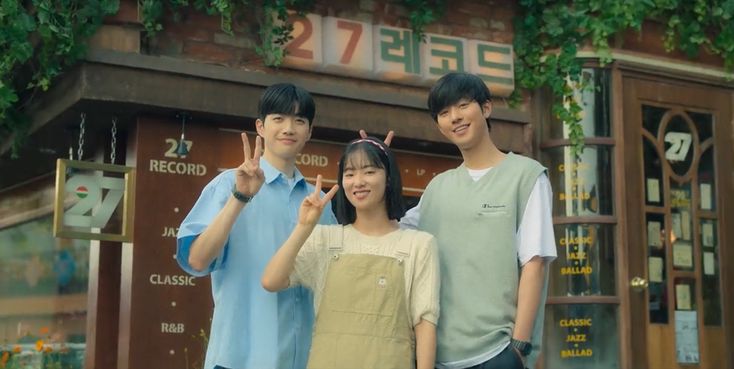
    It happens very often that we find a show or movie to be of such quality that it remains with us forever. However, seldom do we find something that becomes a part of us. “A Time Called You” is that ‘seldom do we find show’ and I can’t find any words to describe how I feel right now.

    I did think at the beginning that this would be good because again it’s a time travel romance drama, that too with Ahn Hyo-seop and Jeon Yeob-been, in any way the show would have been a hit. But I never expected this show to be this good with an entirely new and interesting plot. That’s enough about the plot. I won’t say anything further in order to not spoil it for you.

    The show, the characters and their story, it all became a part of me. I felt I was there too, watching them, enjoying with them, and feeling every other emotion that they felt. Every episode had me on the edge of my seat, thinking I had it all figured out, only to be surprised by unexpected twists and turns. I had to pay close attention because of the back-and-forth storytelling, but it was worth it. Yeo Been’s performance was outstanding, especially in how she portrayed the two different characters. The cinematography was breathtaking start to end and the colour pallete was aesthetically eye pleasing.

    All in all, A Time Called You is an incredible drama and it is very hard to express it in words, no review can make you feel how good this drama is, you have to watch this drama to feel the emotions. It constantly surprises you and keeps you on the edge of your seat. I tried to predict what would happen, but the story always had unexpected twists. The number of surprises in this drama is thrilling, and I couldn’t stop watching it.

    After watching it you will know why I am going all crazy over this. You will in know everything, in a time called you.

  • From June to December: Summer Villanelle by Wendy Cope

    You know exactly what to do—
    Your kiss, your fingers on my thigh—
    I think of little else but you.

    It’s bliss to have a lover who,
    Touching one shoulder, makes me sigh—
    You know exactly what to do.

    You make me happy through and through,
    The way the sun lights up the sky—
    I think of little else but you.

    I hardly sleep—an hour or two;
    I can’t eat much and this is why—
    You know exactly what to do.

    The movie in my mind is blue—
    As June runs into warm July
    I think of little else but you.

    But is it love? And is it true?
    Who cares? This much I can’t deny:
    You know exactly what to do;

    I think of little else but you.

    -Wendy Cope

  • Perspective

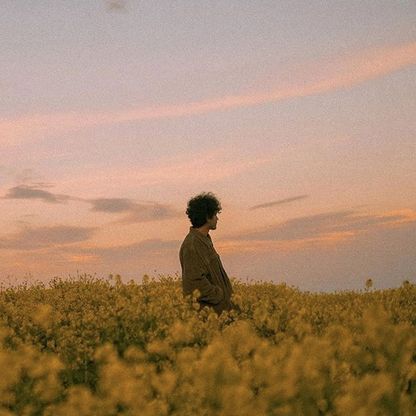
    The romanticism of orange flowers can be characterized by the confluence of a multiplicity of evocative features. This chromatic and olfactory combination is imbued with a subtlety and richness that is unparalleled in its ability to evoke a sense of longing and desire.

    The hue of orange is inherently linked to warmth, vitality, and dynamism. It is a hue that is undeniably uplifting, evocative of the sun and the fertile earth. The allure of orange flowers is further enhanced by their delicate, intricate structures. The petals are intricately arranged in a symmetrical and harmonious fashion, creating an organic geometry that is both mesmerizing and seductive. When viewed from a distance, the flowers appear as a vibrant orange blur, an ethereal presence that seems to glow with an inner radiance.

    However, if one looks at this picture closely then the beauty of the orange flowers might be overlooked by the human race for their eyes shall be focussed on the barren lands behind. The juxtaposition of the orange flowers amidst the dry, barren lands creates a striking visual dichotomy. The vibrant hue of the blossoms seems almost surreal against the dull and lifeless landscape. It is as if nature itself is making a bold statement, asserting its resilience and determination to survive. The flowers’ delicate petals sway in the unrelenting heat, a reminder of the fragility of life, yet also of its tenacity. It is a scene of contrasts, of beauty amidst decay, of hope amidst despair. The orange flowers serve as a beacon of light in the darkness, a small but powerful symbol of nature’s ability to endure and flourish against all odds.

    In the presence of the orange flowers amidst the barren land, human tendencies are often marked by a desire to assign purpose to their existence. Questions arise, such as “what is the point of these flowers in such a desolate landscape?” This inclination towards rationalization can obscure the inherent beauty of the scene and reduce it to mere functionality. It is as if we seek to impose our own sense of order onto the natural world, to explain away the inexplicable. Yet the orange flowers defy such narrow-minded thinking, existing simply because they can, a testament to the whims of nature and the beauty that arises from its unfettered expression. In a world increasingly defined by human intervention and control, the orange flowers serve as a reminder of the intrinsic value of the natural world and the importance of embracing the beauty that arises from its inherent chaos.

    The orange flowers’ mere presence in a barren landscape subverts the human impulse to impose order and rationality, instead offering a glimpse into the unpredictable, yet exquisite, manifestations of the natural world. It is a display of nature’s raw, unbridled power, a force that has no need for human rationalization or purpose. Rather, it is an entity that is self-sufficient, infinitely complex, and wholly deserving of appreciation in its own right.

    “Amidst the barren lands, some orange in flowers blooms,

    personifying a flicker of hope in the desolate gloom.

    The vibrant hue, acting as a beacon of life

    in the midst of an arid terrain, existing as a

    testament to nature’s resilience, despite the parched pain.

    Each petal, a brushstroke of colour on a canvas of dust and sand,

    a masterpiece of contrast, the perfect blend of desolation and grand.

    For even in the bleakest of landscapes, life finds a way,

    to bloom and thrive, to shine and stay.”

    aaditya

    Perspective
  • Romanticising Oranges through “An Orange” by Wendy Cope

    If, as they say, poetry is a sign of something
    among people, then let this be pre-arranged now,
    between us, while we are still peoples: that
    at the end of time, which is also the end of poetry
    (and wheat and evil and insects and love),
    when the entire human race gathers in the flesh,
    reconstituted down to the infant’s tiniest fold
    and littlest nail, I will be standing at the edge
    of that fathomless crowd with an orange for you,
    reconstituted down to its innermost seed protected
    by white thread, in case you are thirsty, which
    does not at this time seem like such a wild guess,
    and though there will be no poetry between us then,
    at the end of time, the geese all gone with the seas,
    I hope you will take it, and remember on earth
    I did not know how to touch it, it was all so raw,
    and if by chance there is no edge to the crowd
    or anything else so that I am of it,
    I will take the orange and toss it as high as I can.

    Analysis

    If, as they say, poetry is a sign of something among people, then let this be prearranged now, between us, while we are still peoples:”

    The speaker begins by questioning the significance of poetry and its ability to connect people. The phrase “let this be pre-arranged now” suggests a desire to make a meaningful connection with the reader, even if it is at the end of time.

    that at the end of time, which is also the end of poetry (and wheat and evil and insects and love), when the entire human race gathers in the flesh, reconstituted down to the infant’s tiniest fold and littlest nail,”

    The speaker continues to imagine a future time when everything will come to an end, including poetry, love, and life as we know it. The phrase “reconstituted down to the infant’s tiniest fold and littlest nail” suggests that even in this future time, the speaker and the reader will be reconnected at the most fundamental level of human existence.

    I will be standing at the edge of that fathomless crowd with an orange for you, reconstituted down to its innermost seed protected by white thread,”

    Here, the speaker offers the reader an orange, which represents a gesture of love and connection. The phrase “reconstituted down to its innermost seed protected by white thread” reinforces the idea that even in the future, the speaker and the reader will be connected at the most fundamental level of existence.

    in case you are thirsty, which does not at this time seem like such a wild guess,”

    The speaker suggests that the reader may be thirsty at the end of time, and that the orange will be a refreshing drink. This line also highlights the uncertainty and unpredictability of the future.

    and though there will be no poetry between us then, at the end of time,”

    The speaker acknowledges that poetry will no longer exist in the future, but the orange will be a meaningful gesture of love and connection regardless.

    the geese all gone with the seas,”

    This line suggests a future world in which natural beauty and wonder will no longer exist.

    I hope you will take it, and remember on earth I did not know how to touch it, it was all so raw,”

    The speaker hopes that the reader will accept the orange as a symbol of love and connection, even though the speaker did not fully understand its significance during their lifetime.

    and if by chance there is no edge to the crowd or anything else so that I am of it,”

    The final lines of the poem suggest a sense of uncertainty about the future and the possibility that the speaker may not be present at the meeting with the reader.

    I will take the orange and toss it as high as I can.

    Despite this uncertainty, the speaker vows to make the gesture of offering the orange, even if it is only to the universe itself. This final line is a powerful image of hope and connection that transcends time and space.

    “peeling oranges this, sharing tangerines that, what about cutting and de-seeding pomegranates for the ones you love? the ruby stains on your fingers fleeting proofs of your undying devotion”

    -aaditya

  • An Ode to Romanticism: A Reverie of Love through Ethereal Metaphors of Sky, Clouds, Flowers and Air

    I was compelled to love you, not because you are the fairest, but because you are the deepest, for a lover of mere beauty is usually a fool

    – Mahmoud Darwish (1941-2008).

    Coming out of the spiritual and traditional holds of the conventional genres of poetry, the late 18th and 19th centuries provided for a poetic movement that was dedicated whole-heartedly towards the interior worlds of feeling, in opposition to the mannered formalism and disciplined scientific enquiry of the enlightenment era that preceded it. This movement is what is termed as Romanticism. Poets like Mary Shelley, Mary Robinson, Charlotte Turner Smith, William Wordsworth, Samuel Taylor Coleridge, John Keats, Percy Shelley, William Blake, Lord Byron, and so on, are huge examples of this ideology of literature, and produced works that expressed spontaneous feelings, found parallels to their emotional lives in the natural world, and celebrated creativity rather than logic. 

    The spirit of Romanticism wasn’t just to counter the ideology upheld by the Enlightenment era, rather it was majorly dedicated to celebrating the creativity of life and emotions by the use of metaphors and paralleling the natural world with human emotions, and love being the epitome of the same. Nature is a substantial presence in Romantic poetry, functioning as a teacher and companion. The poets viewed their art as mediation between humanity and nature and would set their human dramas on her stage. The Romantic wanderer and vicariously the reader would learn his or her place in the universe by journeying through nature’s dark spaces and exotic dream lands. The mysterious, monstrous, and strange are all Romantic era poetic predilections.

    This romantic era emphasised intuition and imagination over reason, everyday language over inscrutable poetic form, and the pastoral over the urban. Imagination is the gateway to transcendence, and the poet filters powerful emotions and emotive responses, translating them into an accessible poet form. The arguably extreme idealism of Romanticism was characterised by a search for immortality, imperfections and pure love, in parlance with everyday life. 

    The Sky: An Eternal Muse for Poets 

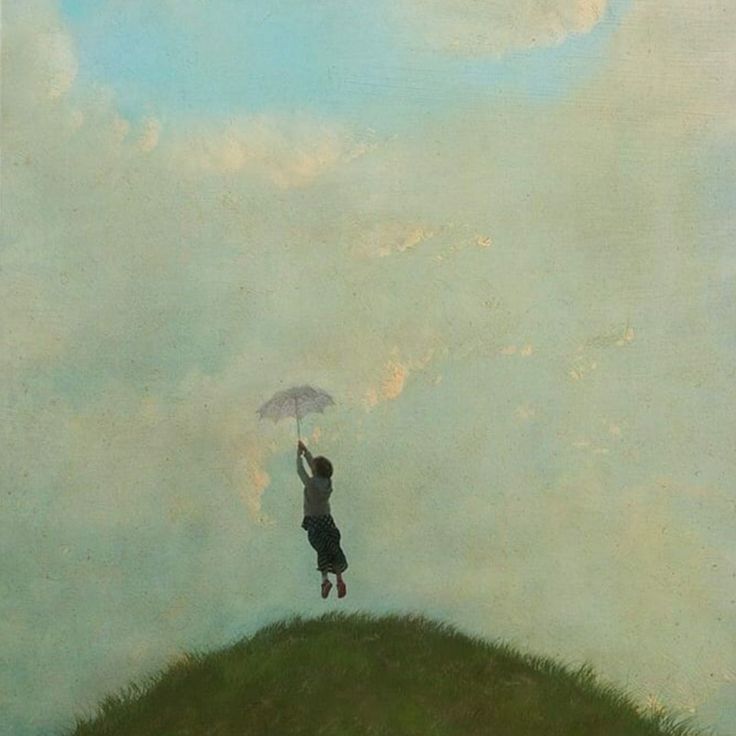
    The sky has been an eternal muse for poets and artists alike, its endless expanse serving as a captivating metaphor for the depth and breadth of love. The sky’s vastness evokes a sense of infinity, mirroring the boundless nature of the love that we feel for another. The clouds that dance across the sky are akin to the ebbs and flows of a relationship, representing moments of turbulence as well as serenity. The sunrise and sunset, in all their resplendence, capture the start and end of a love story, embodying the promise of new beginnings and the acceptance of closure. The stars that shimmer in the night sky, like diamonds in the firmament, symbolise the fleeting yet profound moments of happiness shared with our beloved. The moon, in all its mystique and enchantment, encapsulates the magic and transformative power of love, illuminating our path to finding meaning and purpose. Ultimately, the sky reminds us of the universality of love, a force that binds us together and gives our lives greater meaning.

    Indeed, the sky continues to inspire and captivate us, with its ever-changing hues and moods. The shifting shades of blue and pink during dawn and dusk reflect the nuances of love, its shades and intensities. The wispy clouds that adorn the sky, taking on a myriad of shapes and forms, are reminiscent of the playful and whimsical nature of love. The thundering clouds and lightning bolts that occasionally pierce the sky are akin to the challenges and obstacles that we must navigate in a relationship. And yet, just as the sky eventually clears after a storm, so too can love endure and thrive despite the challenges that may arise.

    Moreover, the sky’s beauty and majesty serve as a reminder of the power of love to transcend our individual selves and connect us to something greater than ourselves. The vastness of the sky reminds us that our love is but a small yet significant part of the grand tapestry of life, a testament to the beauty and wonder of the universe. Whether it is the quiet stillness of a starry night or the vibrant hues of a sunset, the sky is a canvas that reflects the myriad emotions and experiences that love brings into our lives. It is a reminder that love is not just a feeling, but a journey that takes us to new horizons, enriching our lives and elevating our souls.

    Flowers: A Reminder that Eternal Beauty and Love are Inseparable 

    Flowers have long been revered as one of nature’s most exquisite creations, a symbol of love and beauty that transcends cultures and time. Each petal, delicate and intricate, is a testament to the wonder and complexity of life. The vibrant colors that adorn flowers, ranging from soft pastels to bold hues, evoke a sense of vitality and passion that is reminiscent of the intensity of love.

    Like love, flowers have the power to transform us, to uplift our spirits and bring joy to our hearts. Their sweet fragrance and gentle sway in the breeze evoke a sense of calm and serenity, reminding us to appreciate the simple pleasures of life. The different varieties of flowers, each with its own unique beauty and symbolism, offer a rich tapestry of emotions and experiences that are akin to the nuances of love.

    From the dainty and fragile beauty of a rose to the robust and hearty sunflower, flowers represent the diversity and complexity of love. The intricacy of a lily, with its soft petals and complex patterns, captures the depth and richness of love’s many layers. The velvety texture of a carnation, with its vibrant colours and sweet scent, embodies the sensual and passionate nature of love.

    In essence, flowers are a metaphor for love, a reminder that beauty and love are inseparable. They remind us that even in the darkest moments, there is always beauty to be found, a ray of hope that can light up our lives. They remind us that love is not just an emotion, but a force that can inspire us to be our best selves, to see the world in a new and beautiful way. Whether it is a single bloom or a fragrant bouquet, flowers remind us of the power and magic of love, a force that can transform our lives and touch our souls.

    Air: An Ethereal Metaphor of Love

    The air that surrounds us, invisible yet all-pervading, is a poetic and ethereal metaphor for love. Just as the air is essential to sustain life, so too is love necessary to nourish the soul. The gentle breeze that caresses our skin, cool and refreshing, represents the comfort and warmth that love brings to our hearts.

    The air can also be unpredictable and tempestuous, like the ups and downs of a relationship. The winds that gust and swirl, tugging at our hair and clothes, mirror the turbulence and challenges that love can bring. But just as the air eventually calms and settles, so too can love endure and thrive despite the difficulties.

    Moreover, the air is a reminder of the intangible yet powerful nature of love. Just as we cannot see or touch the air, so too is love a force that transcends the physical realm. It is a feeling that fills our hearts and souls, giving us the strength and courage to face the world. The air is also a symbol of freedom and liberation, a reminder that love is not meant to be possessive or suffocating. Like the air that allows birds to soar and clouds to drift, love should give us the space and freedom to grow and evolve as individuals.

    In essence, the air is a beautiful and evocative metaphor for love, reminding us of the delicate yet enduring nature of this powerful emotion. Whether it is the gentle breeze that cools our skin or the gusting winds that challenge us, the air reminds us that love is a force that can bring us to greater heights and give us courage to embrace life to the fullest.

    Clouds: The Ebb and Flow of Love

    The clouds that drift lazily across the sky are a poetic and enchanting metaphor for love, evoking a sense of wonder and mystery. Like love, clouds come in a multitude of forms and shapes, each one unique and breathtaking in its own way. The delicate wisps of a cirrus cloud, high and wispy, embody the ethereal and intangible nature of love, while the dramatic and imposing form of a cumulonimbus cloud reflects the power and intensity of this complex emotion.

    Clouds also have the ability to transform and shape the world around us, much like the way love can alter and shape our lives. The gentle puffs of a cumulus cloud can cast dappled shadows on the ground, creating a sense of enchantment and magic that is reminiscent of the joy and wonder that love can bring. The looming form of a thundercloud, with its dark and ominous presence, is a stark reminder of the challenges and obstacles that love can pose.

    Furthermore, the movement of clouds across the sky serves as a metaphor for the ebb and flow of love. Just as clouds drift and move across the sky, so too can love evolve and change over time. The shifting hues of a sunset or the vivid colours of a sunrise, reflected on the clouds, remind us of the endless possibilities and beauty that love can bring.

    In essence, clouds are a beautiful and evocative metaphor for love, capturing the complexity and wonder of this powerful emotion. Whether it is the delicate and ethereal wisps of a cirrus cloud or the imposing and dramatic form of a cumulonimbus cloud, the clouds remind us that love is a force that can shape and transform our lives, leaving an indelible mark on our hearts and souls.

    Romanticism: A Melody that Stirs Our Heart

    Romanticism is the heartbeat of the soul, the melody that stirs our hearts and fills us with a sense of wonder and awe. It is the brushstroke that paints our world with beauty and colour, the spark that ignites our passion, and the fire that drives our dreams. Through romanticism, we connect with the world around us on a deeper level, embracing the complexities and nuances of life with a sense of reverence and awe. It is the force that moves us, the inspiration that drives us forward, and the foundation upon which our most cherished memories are built.

    Romanticism infuses our days with meaning and purpose, reminding us of the beauty and majesty that surrounds us at every turn. It is the laughter that bubbles up from within us, the tears that we shed, and the joy that fills our hearts. It is the promise of a new beginning, the hope that fuels our dreams, and the faith that sustains us through the darkest of times.

    In essence, romanticism is the soul of our existence, the essence of our being that connects us to the world around us. It is the light that illuminates our path, the magic that makes our hearts sing, and the wonder that fills our days with joy and delight. Without romanticism, life would be a mere existence, a hollow shell of what it could be. But with romanticism, we soar to greater heights, embracing the wonder and beauty of life in all its splendour.

    -Aaditya Bajpai

Design a site like this with WordPress.com
Get started