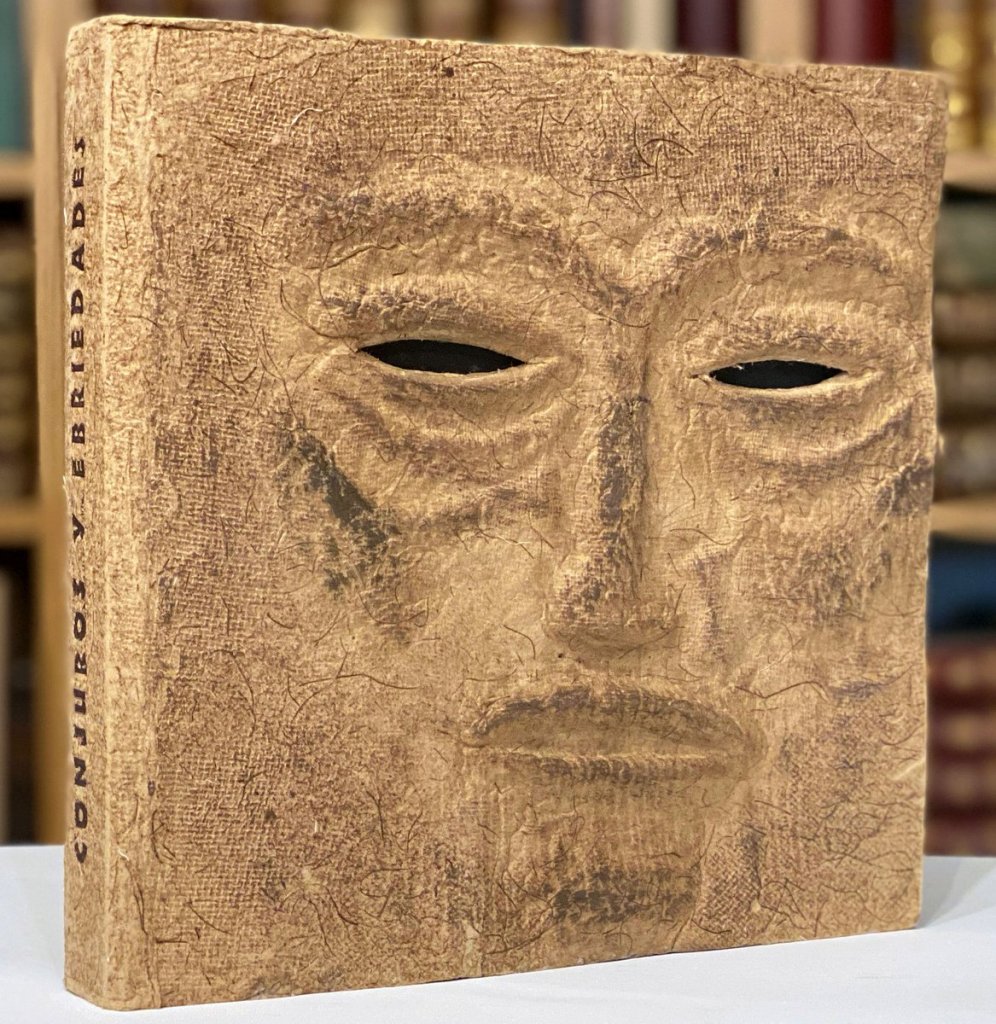
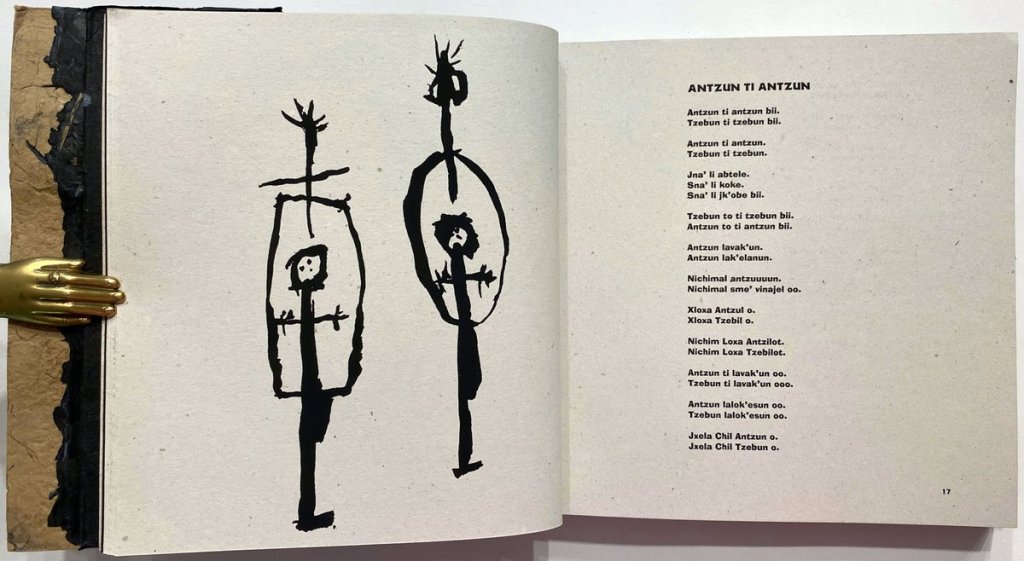
This is the first book created, written, illustrated, printed and bound in paper of their own making, by indigenous Mayan people in nearly 500 years. This book is referred to as “Conjuros y ebriedades: cantos de mujeres mayas”, which translates to “Spells and drunkenness. Songs of Mayan women”. This book of Mayan artists is a collection of spells, hymns, and enchantments. It was originally written in the Tzotzil language, which is a Mayan dialect. The texts were later transcribed and translated by the poet Ambar Past, who said, “We get our ideas from the earth: we copy the fossil of a tropical leaf and the surface of a sea snail.” Elena Poniatowska says, “Conjuros y ebriedades is one of the hundred most beautiful books in the world. The cardboard face breathes, looks through the slits in its eyes, and speaks with its open mouth inside the paper.” One tremendous trait of the book is that if we hold the book in our hands, the eyes look at us. (Refer Image 1)
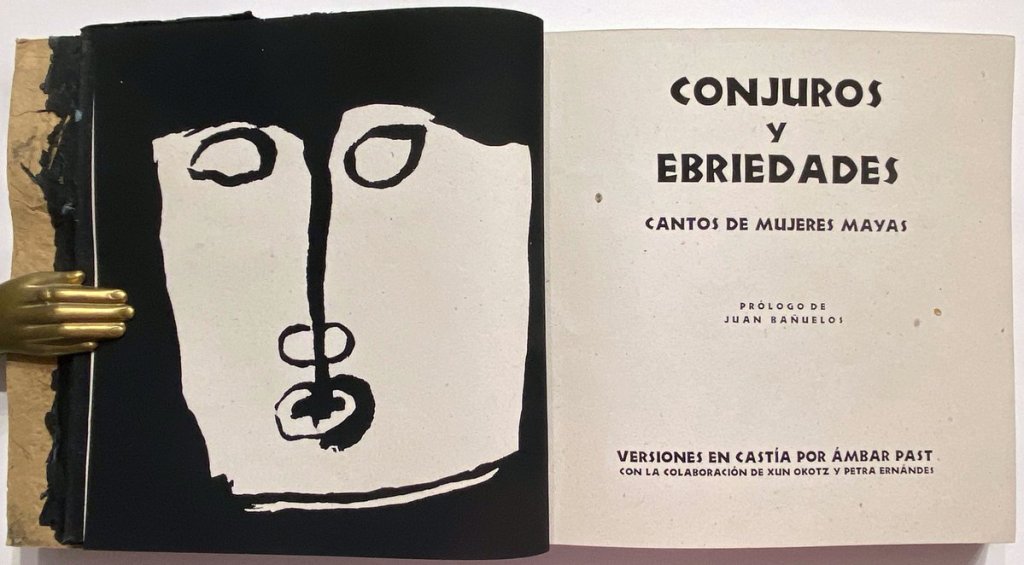
The Taller Leñateros that publishes it, is a community of Mayan artists, founded in 1975 by the poet Ambar Past. His specialty is handmade paper, artist books, serigraphy and engraving (on wooden blocks and similar surfaces), pansey graphics, natural inks, etc. This book, 20 years in the making, records the traditional oral poetry of the local Tzotzil & Tzeltal people. (Refer Image 2).
The finished volume has 190 pages and 50 silkscreen illustrations by Tzotzil & Tzeltal women. The end papers are recycled paper with palm fronds, logwood and soot added. The three-dimensional cover is cast from paper made of recycled cardboard boxes, corn silk and coffee. Bound in boards covered with handmade brown paper, with a large face in relief representing the Mayan goddess of the desert filling the cover. The final pages are also handmade. Housed in a cardboard box printed with white title on the spine panel. It contains 45 poetic charms, 40 xerographed illustrations, among other various illustrations.
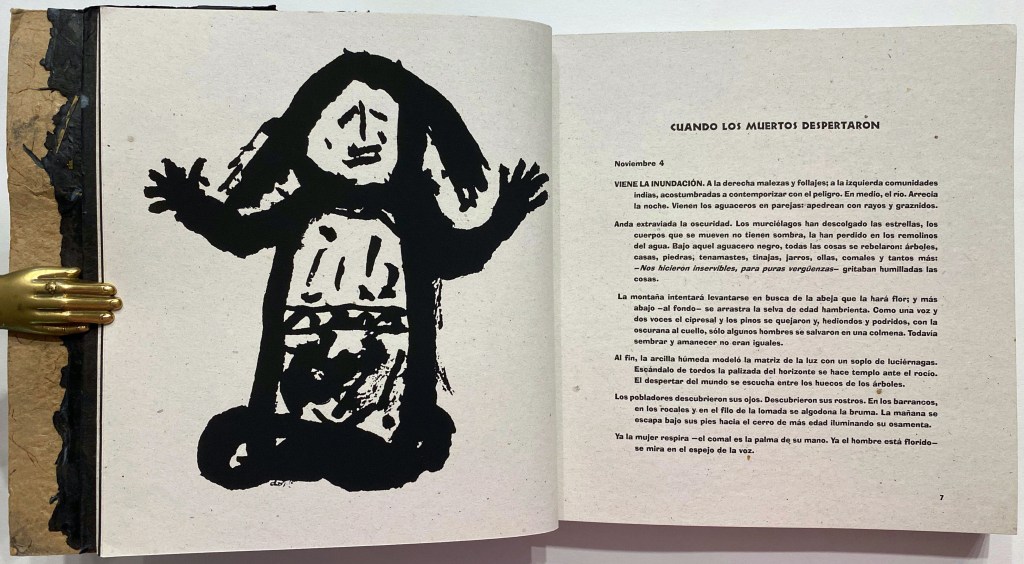
The monologue is written in Spanish, while the poems are written in Tzotzil and have Spanish translations. About 400000 native Tzotzil Maya people in the Mexican state of Chiapas speak the Maya language Tzotzil. Most people who speak Spanish do so as a second language.
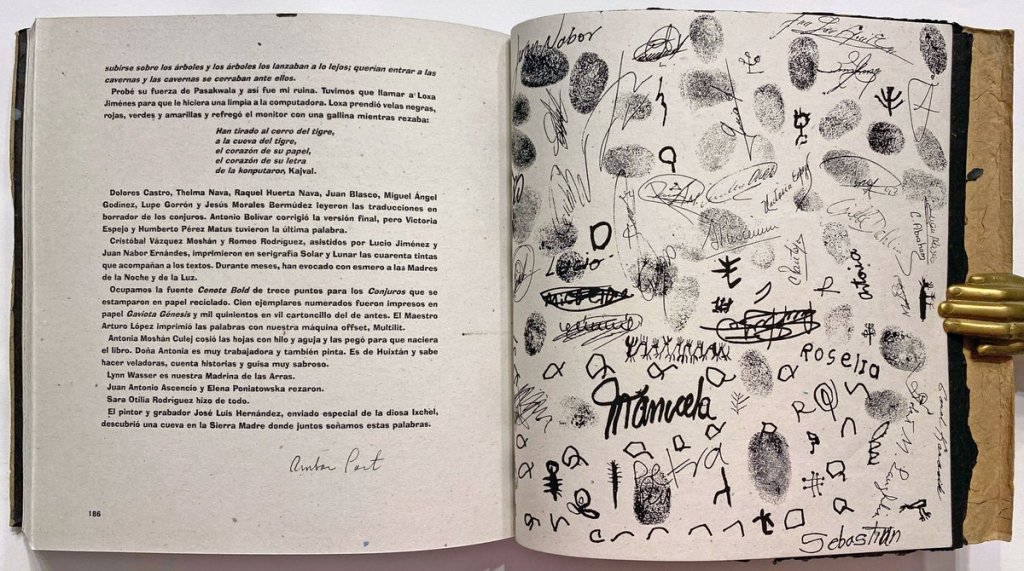
Most moving of all is the colophon, with the signature of Ámbar Past, and the signatures, personal marks & thumbprints of all the Mayan women – there are 150 in the collective – who assisted in the transcribing of the poems, and in the making of the book.
In the words of Ambar Past, “These spells and intoxicants were dreamed by Mayan women from the highlands of Chiapas. The Tzotzil authors of this book do not know how to read. They claim that these songs were given to them by their ancestors, the First Mothers, who keep the Great Book where they keep the spells. Loxa Jiménes Lópes, from Epal Ch’en, Chamula, says that an Anjel, daughter of the Owner of the Caves, began to speak in his ear and then in a dream showed him the Book with all the words of the songs”.
*The rights to all images belongs to its owners.
This article is researched and summarised by Aaditya Bajpai*
 Aaditya Bajpai